Cold in the Rock
Yeast & Fermentation
Is Rotbier top- or bottom-fermented? Nuremberg Rotbier is brewed bottom-fermented, with lager yeast that works at cool temperatures and settles at the bottom. The yeast converts the sugar in the wort into alcohol and carbon dioxide, and the cooler it works, the cleaner and calmer the result tastes.
Lager yeast is a hybrid of two species: brewer's yeast, Saccharomyces cerevisiae, and Saccharomyces eubayanus, only described in 2011. Emil Christian Hansen achieved the first pure culture of a bottom-fermenting yeast in 1883 in Carlsberg's laboratory. Nuremberg brewers had been brewing bottom-fermented beer long before anyone knew why it worked.
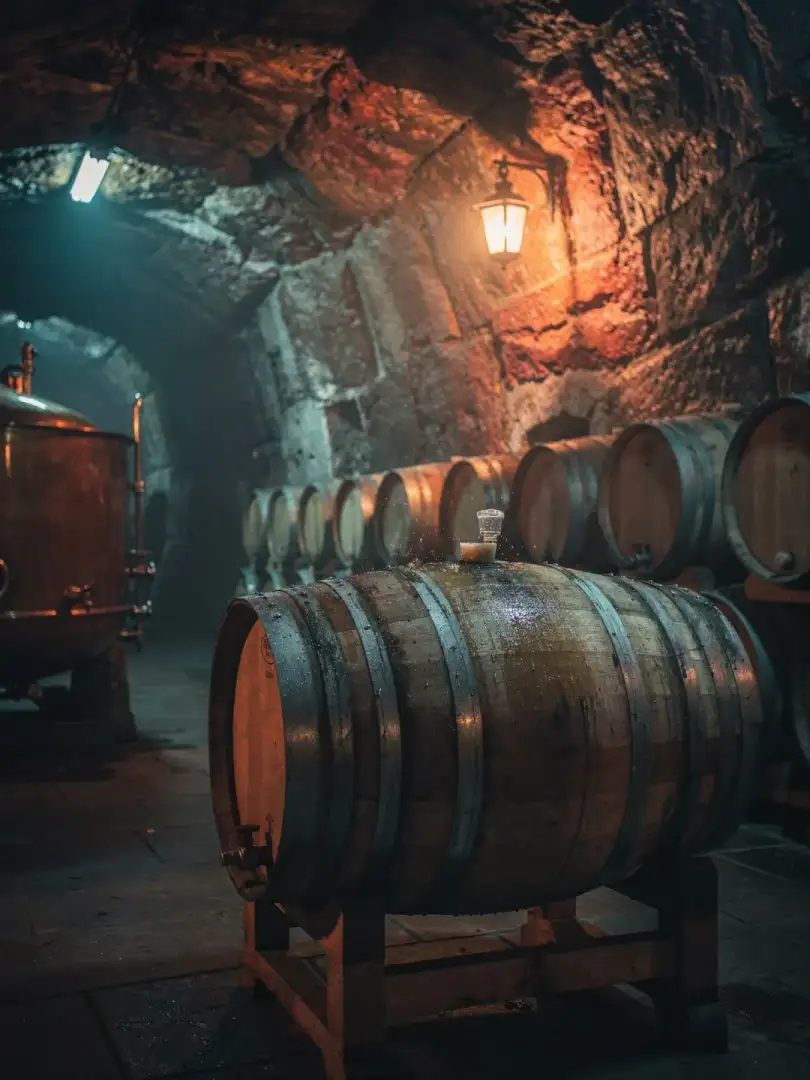
The place where the beer was left to ferment and mature in this city was the rock-hewn passage. By council ordinance, every brewer needed a cellar for storing and fermenting. Inside the sandstone it stays cool year-round, which was enough to let the beer mature undisturbed — the same job refrigeration technology does today.
How long Rotbier rests in the cellar today is stated individually by each brewery. For lagers, the rule of thumb holds: the longer the maturation at low temperature, the rounder and clearer the beer becomes. Exact times and fermentation temperatures for Nuremberg Rotbier are generally kept private by the breweries.
Today the beer ferments in stainless steel tanks — at Tucher, in the brewhouse built in 2008 right on the city boundary. Hausbrauerei Altstadthof still ages part of its special beers in the Historic Rock-Hewn Cellars, in the very same rock that the council made mandatory centuries ago.