Cool and Slow
Yeast & Fermentation
Almost all Regensburg beers are bottom-fermented. Bottom-fermenting yeast works at low temperatures, roughly between 8 and 12 degrees Celsius, and settles at the bottom of the tank at the end of fermentation. The result tastes clean and crisp, without the fruity notes of top-fermented beers.
Lager yeast is a hybrid: Saccharomyces pastorianus arose from the crossing of brewer's yeast with a wild yeast first described in Patagonia in 2011. The Dane Emil Christian Hansen cultivated the first pure bottom-fermenting yeast strain in Copenhagen in 1883. However, brewing with lager yeast in Bavaria had already been happening long before that.
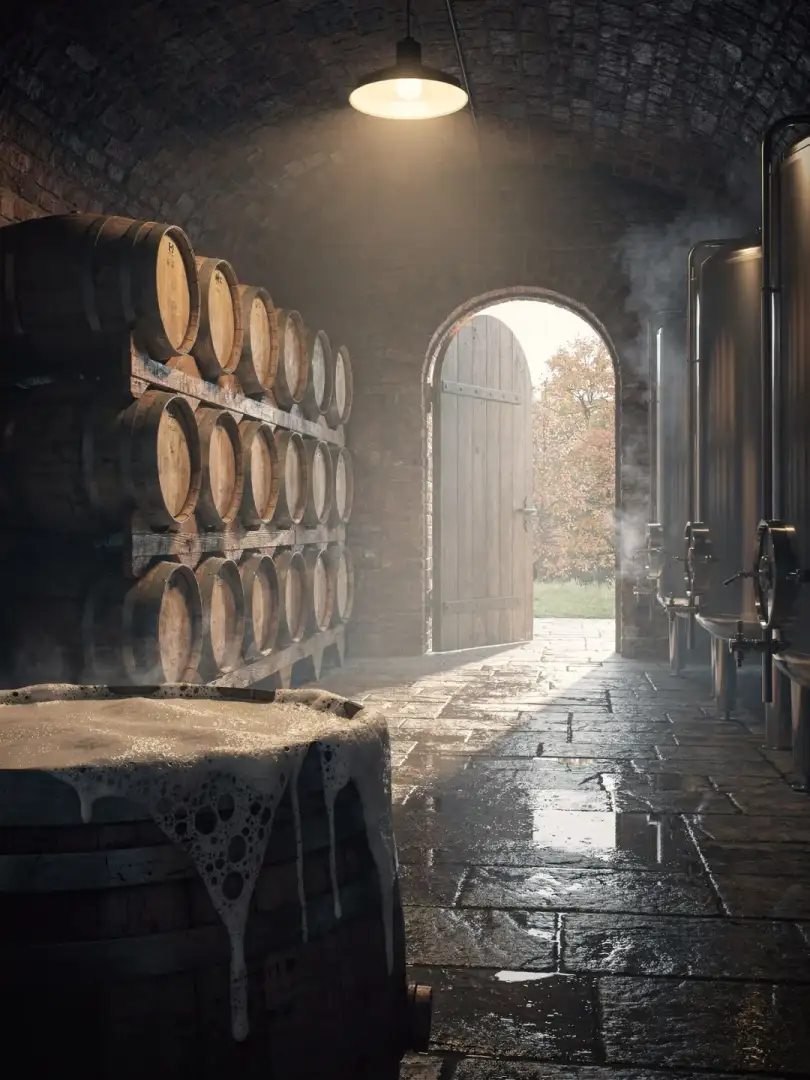
Fermentation is followed by lagering, during which the beer rests, matures, and clarifies in the cold for weeks. This is exactly what the cellars built into the hillside were designed for. Anyone drinking a Kellerbier often gets an unfiltered, slightly hazy beer that comes straight from the cask after this maturation period.
In the northern Oberpfalz, things work a bit differently. Zoigl beer is brewed in the Kommunbrauhaus, a communal brewhouse owned collectively by the townspeople. The wort is produced there together, while fermentation and lagering are handled by each family in their own cellar.
Breweries rarely specify exactly which yeast strain is at work in which operation. One thing is certain: the cooler and slower the fermentation, the finer the flavor becomes.
The Galgenberg also shows why lagering time matters. A bock that rests in the cellar becomes rounder, as harsher aromas mellow over time. A Helles needs only a few weeks, while a strong beer benefits from longer aging. Anyone drinking beer fresh from the tank notices the difference immediately: it tastes younger, yeastier, and more edgy, while aged beer feels smooth and settled.