Mug, Cellar, Cool
Tasting
What does Rhön beer taste like? Mostly calm and rather malty, rarely loud. The Kreuzberger Klosterbier Dunkel tastes of bread crust and nut, the Rhönbrauerei's Landpremium describes itself as full-bodied and amber-colored, and the Pils from many Rhön breweries is dry and bitter, but never harsh.
Three beers make a good starting point, and together they show the range of the region. The Kreuzberger Klosterbier Dunkel stands for monastery beer, Rother Bräu for the organic line, and Rhönbrauerei Dittmar for the Thuringian side of the Rhön. Each tells a different story about the same mountain, and all three are best enjoyed exactly where you'll actually find them on tap: in the inns around Bischofsheim and at the monastery tavern.
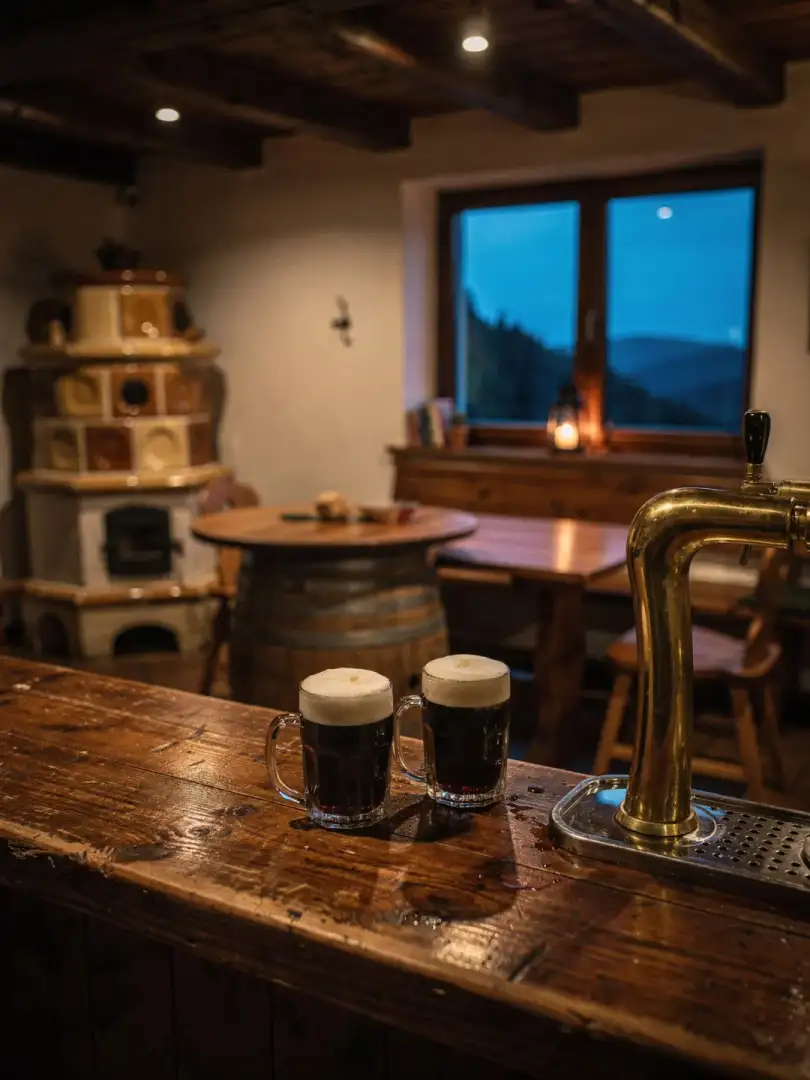
The glass should match the beer. Dunkel and Bock taste good in a stein or a handled mug, since the hand doesn't warm the beer. Pils belongs in a tulip glass or stemmed pokal, where the aroma can gather.
Temperature matters a great deal. Pils is best enjoyed at around 6 to 8°C (43–46°F), Dunkel and Bock at 8 to 10°C (46–50°F), so the malt can show its flavors. Too cold, and the beer tastes of nothing; too warm, and it turns heavy and overly sweet. Both can be avoided simply by letting the glass stand for a moment.
Patience helps when pouring. Tilt the glass slightly, let the beer run down along the side, then stand it upright at the end to build a firm head of foam. That foam protects the beer from the air and holds the aroma together.