Glass, Temperature, Examples
Tasting
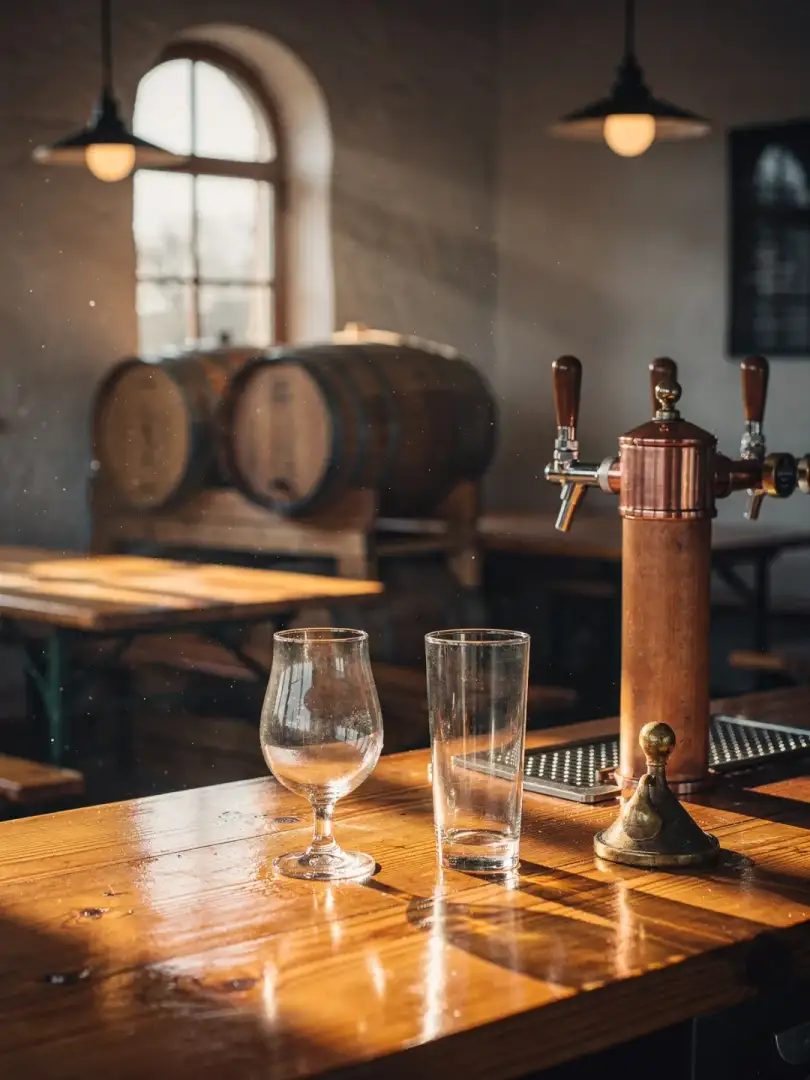
How should you drink Gose properly? Well chilled, at around 6 to 8 degrees Celsius, served in a slim, tall glass or a tulip glass. This lets the slight haze stay nicely visible and allows the lemony aroma to gather at the top. A Pils, on the other hand, gets the classic Pils tulip or a slender cylinder glass, and it's poured a bit colder. But too cold is also a mistake, since at near-freezing temperatures aroma and flavor hide away. A few minutes in the glass will open up the aromas.
When pouring a Pils, the usual rule applies: start at an angle, build up the head, then straighten the glass. A firm white foam cap keeps the carbonation in the beer, and the glass should be clean and wet.
For orientation, it helps to look at breweries that exist or once existed. Brauerei Bodenstein in Magdeburg carries on a brand dating back to 1823. The Hallesches Brauhaus in Halle's old town represents the city's brewhouse culture. Both are examples of taste, not a specific recommendation.
What's been lost can be described too. Landsberger was a family business that closed at the end of 2025. Colbitzer was regarded as a classic heath brewery and is set to close by the end of 2026. Anyone who finds the last bottles on a shelf is drinking a piece of the state's history that can no longer be brewed again.
A simple sequence helps when tasting. First look, then smell, then take a small sip and wait to see what the finish does. A Gose starts tart and ends salty-dry; a Pils starts fresh and ends bitter.