Rivers & Cellars
Water & Soil
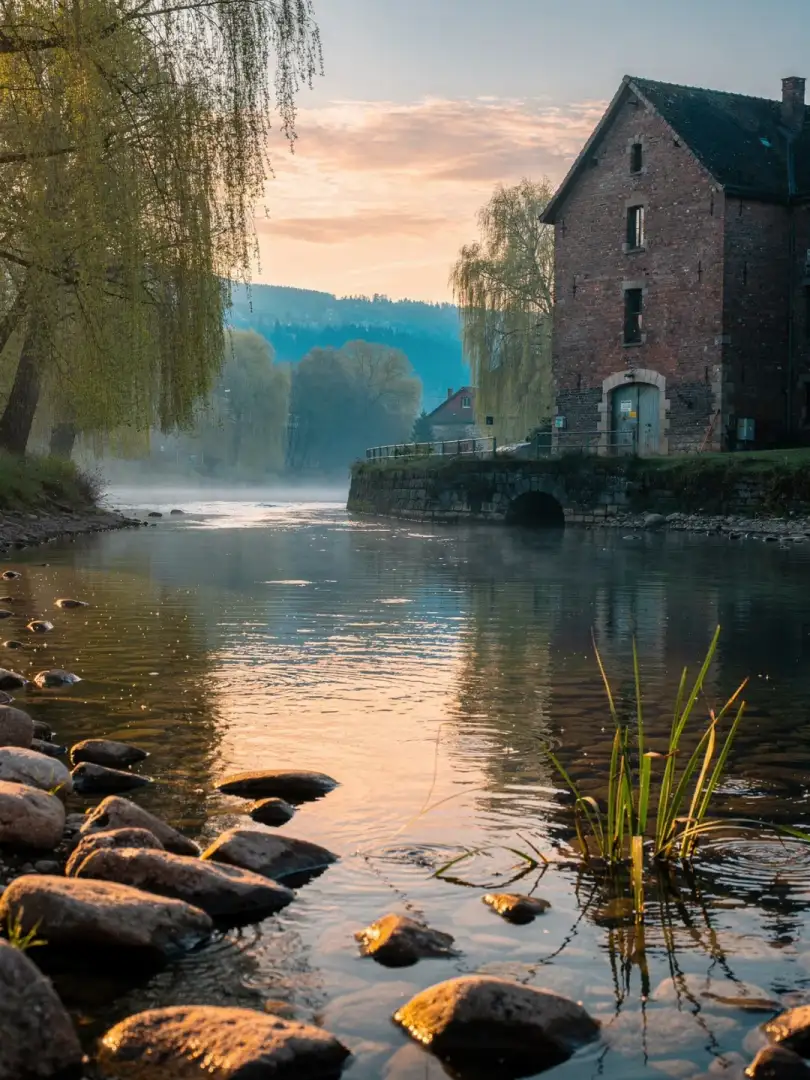
The Meurthe, Moselle and Meuse rivers run through Lorraine, with the Vosges mountains to the east. The Meurthe also flows past Saint-Nicolas-de-Port, home to the brewery museum. Brewing water makes up the largest part of any beer, which is why the first question about a brewery is always where its water comes from.
How hard is brewing water, and what difference does it make? Hard water contains a lot of dissolved lime and gypsum, while soft water contains little. Soft water, like that in Pilsen, suits pale, hop-forward beer, while sulfate-rich water, like that in Burton upon Trent, emphasizes bitterness. Carbonate-rich water, such as Munich's, favors dark malts.
Whether these rules still apply to Lorraine today is largely an academic question. Almost all breweries now treat their water, through softening, reverse osmosis or the addition of salts. As a result, the landscape shapes the character of the beers far less than it once did.
For a long time, climate mattered more. Lorraine has winters cold enough to make use of cellars and ice. Bottom-fermented beers need to mature in cool conditions, and before refrigeration technology, being underground was the only way to achieve that.
At the museum in Saint-Nicolas-de-Port, you can trace how a brewery used water, from mashing to cooling. The rooms are still intact, the vats still gleam, and you quickly understand why breweries were traditionally built along rivers.
Nancy, the regional capital, also sits on the Meurthe. Most of the many breweries Lorraine once had were clustered around the city. Follow the river today, and on some banks you'll still spot old factory buildings where water, malt and hops were once turned into beer.