Farms & Borderland
Region & History
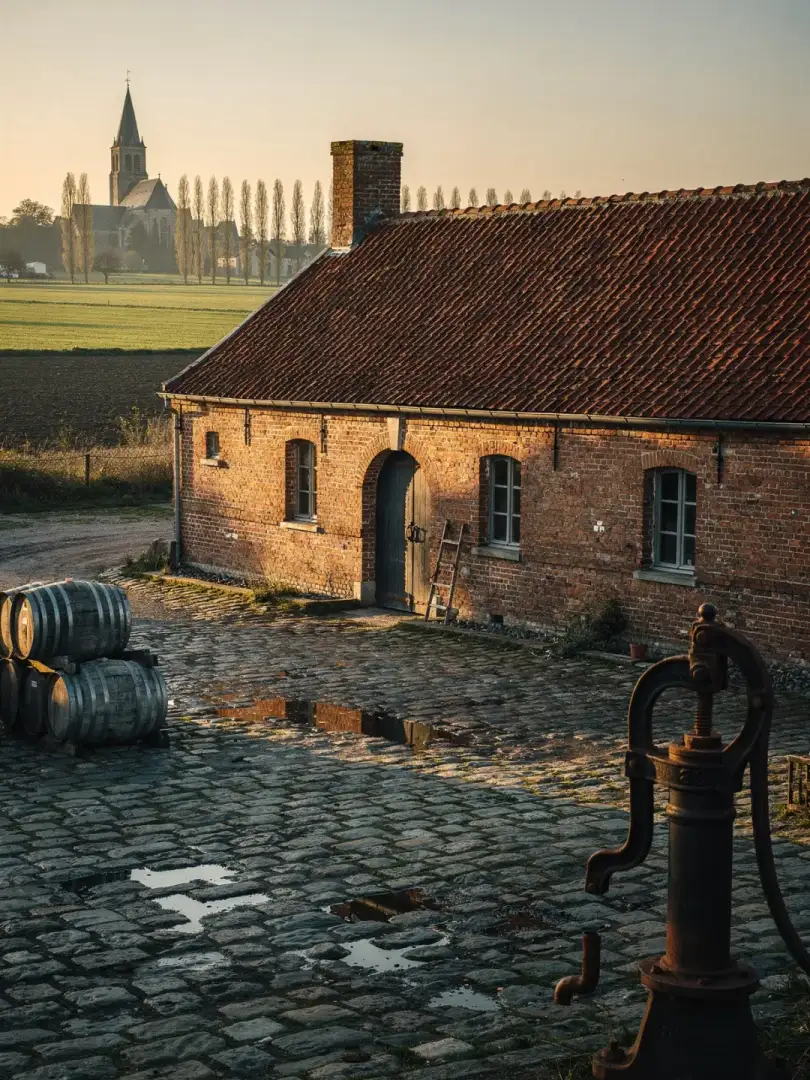
Between Lille, Valenciennes and the Belgian border lies the land of Bière de Garde. The name means "beer for keeping." Farmers in the Département Nord and Pas-de-Calais brewed it on their farms in winter and spring, as long as temperatures stayed low enough to keep the yeast in check. What remained was carried down to the cellar to age.
The region long belonged to Flanders, and Flanders often changed hands. That history shaped its breweries. According to the brewery in Saint-Sylvestre-Cappel, brewing there dates back to at least 1600, though wars repeatedly broke the thread. It was founded in its present form in 1920 by Rémi Ricour, and remains family-owned to this day.
Around 1900, French Flanders had more than 220 breweries, according to this brewery's own figures. After that, the network of farmhouse breweries shrank dramatically. The brewery in Saint-Sylvestre-Cappel calls itself the last historic brewery in the region; since 2019 it has gone by the name Brasserie 3 Monts, after its best-known beer.
In 1922, the Duyck brewing family settled in Jenlain near Valenciennes. In the early 1950s, Brasserie Duyck began bottling its beer in large 750-milliliter bottles and raised the alcohol content to 7.5 percent. By the late 1970s, Jenlain had become a surprise success and is since credited with sparking a small revival of French specialty beers.
There's no protected designation of origin. Bière de Garde doesn't appear in the EU register of protected names, so any brewery is free to call its beer that. The Trappists are also represented in the north, at Mont des Cats. Their beer, however, carries no ATP logo and has been brewed at Chimay in Belgium since 2011.