Three Malts
Malt & Grain
Taste a Jenlain Ambrée and malt is what you notice most. According to Brasserie Duyck, the brew contains three types of malt made from French barley: Pilsner malt, Munich malt and coloring malt. This is what gives the beer its amber hue, with aromas of caramel, bread crust and lightly roasted nuts.
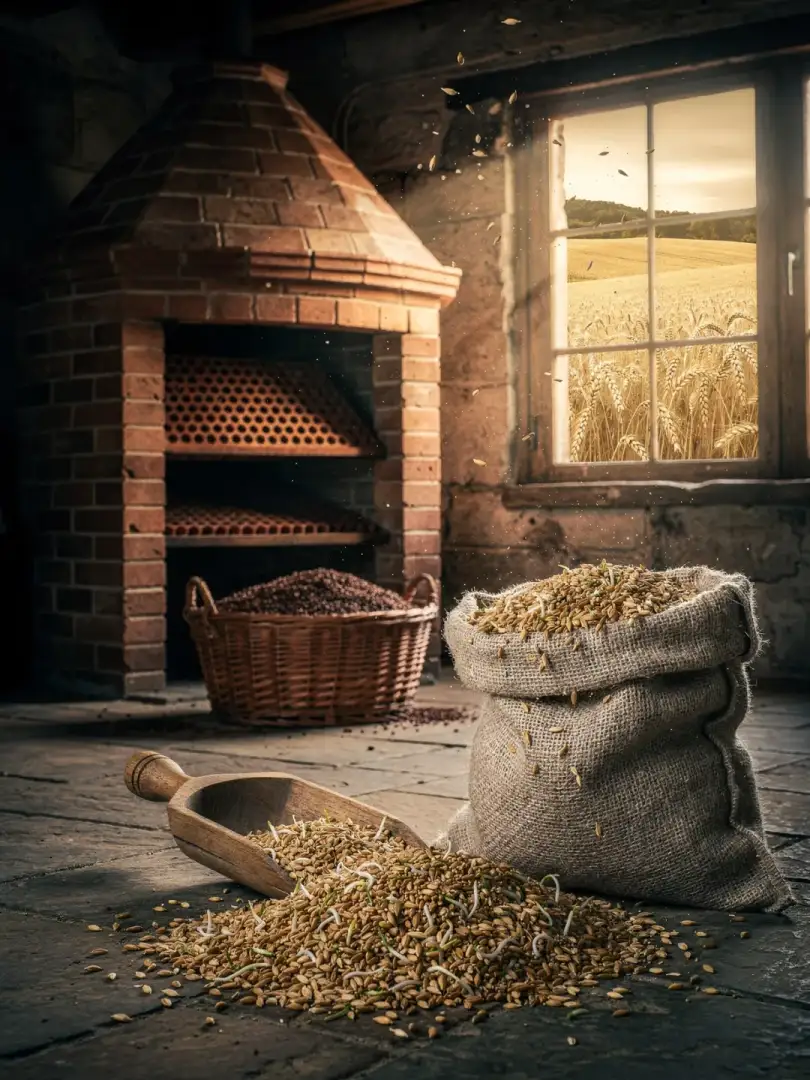
Malt is made by soaking barley until it germinates, then halting the sprout in a kiln, a heated drying chamber. The longer and hotter the grain sits there, the darker and more aromatic the malt becomes. Pale Pilsner malt brings freshness and grainy sweetness, Munich malt adds more bread-crust character, and coloring malt contributes the roasted note and dark color.
The style guideline for Bière de Garde is broad. According to the BJCP style description, color ranges from 12 to 37 EBC, meaning anywhere from golden blonde to deep brown, and original gravity falls between 14.7 and 19.3 degrees Plato. Original gravity refers to the sugar content of the wort before fermentation. More sugar means more alcohol and a fuller body later on.
This explains why the Blonde, the Ambrée and the Brune from the same brewery can taste so different despite sharing a base recipe. The brewer simply shifts the ratio of malts. In the Blonde, pale malt dominates; in the Brune, dark varieties take over.
Barley is a familiar sight in the fields of northern France, with vast grain fields shaping the landscape. It makes sense that breweries source their barley locally, though there's no fixed rule requiring it.