Cask Maturation
Yeast & Fermentation
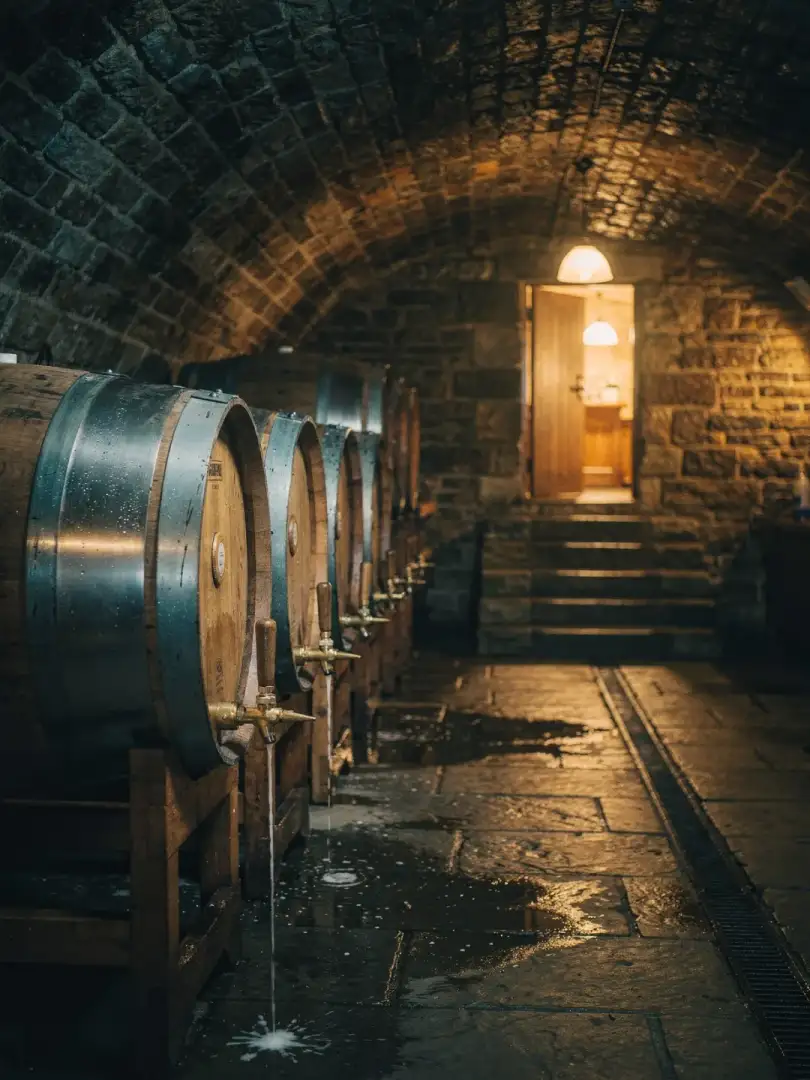
What is cask ale, and how does it differ from keg beer? Cask ale is a top-fermented beer that goes into the cask alive, meaning still with yeast, and finishes conditioning in the pub cellar. Top-fermented means the yeast floats on top and works at warmer temperatures, usually between 18 and 22 degrees Celsius.
The secondary fermentation then takes place in the cellar. The yeast consumes the last of the sugar and produces gentle carbonation in the process. That's why cask ale has little foam and barely any fizz. The yeast settles at the bottom of the cask, and the beer turns clear.
It's served using a handpump, a kind of pull-lever pump on the bar. The landlord draws the beer up from the cellar with it, without any gas pressure. Once a cask has been tapped for a few days, the beer loses freshness, which is why cask ale is best drunk as soon as possible after tapping.
This stands in contrast to keg beer, which is filtered and served under gas pressure. It keeps longer and tastes more consistent, but less lively. Many pubs in the Southwest offer both, often Tribute on cask alongside a keg lager on the bar. If you want to taste the difference, order both one after the other and pay attention to the foam, warmth, and freshness of the yeast.
How long a cask ale conditions is up to each brewery. The landlord checks clarity, smell, and temperature in the cellar before the cask goes on the pump. This care is known in English as cellarmanship, and it's considered half the work of brewing.