Malvern, granite, clay
Water & Soil
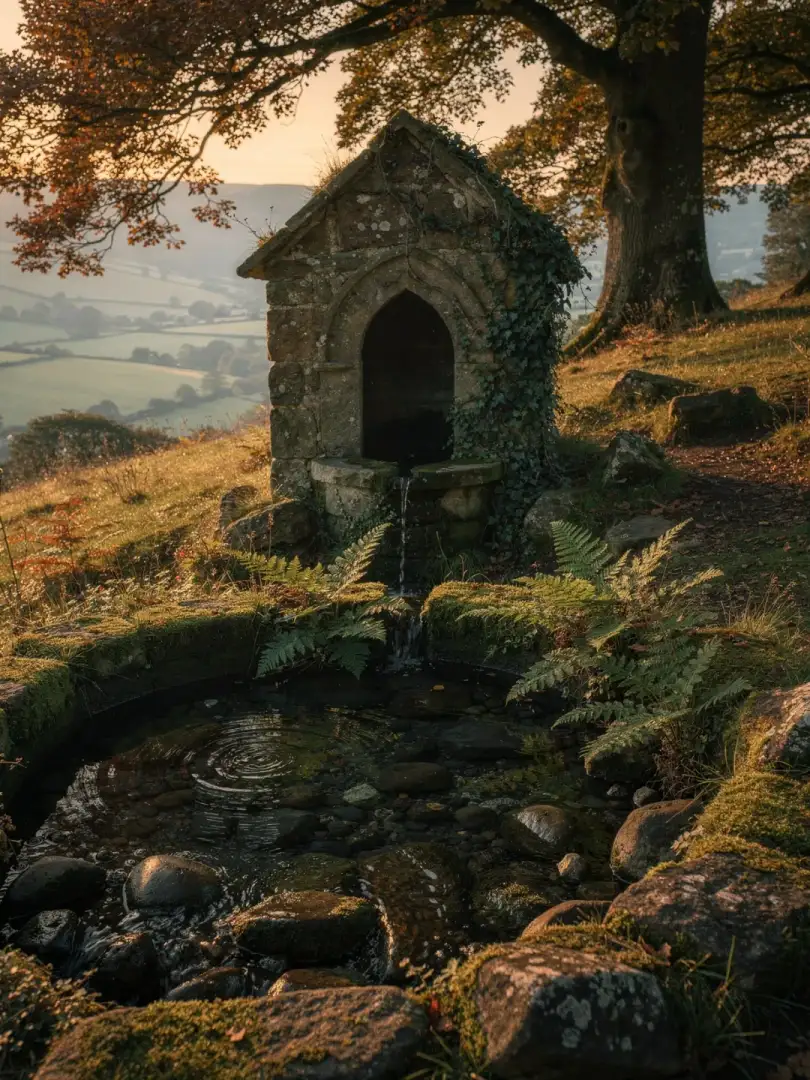
Which water shapes the beers between Hereford and Worcester? The area's most famous water comes from the Malvern Hills, which form a ridge straddling the border of the two counties. The hills are made of some of the oldest and hardest rock in Britain, granite and other hard stone. Rain seeps through the cracks, is stored there, and re-emerges at the springs.
According to the Earth Heritage Trust, the springs flow steadily, averaging about 60 liters per minute, and they have never run dry. The water is soft because the rock dissolves very little. At the Holy Well in Malvern Wells, water has been bottled since the 1620s. Schweppes bottled it on a large scale from 1850 to 2010, and since 2009 there has been a family-run brand.
The same applies to beer as everywhere else: breweries today treat their water as needed, adding or removing salts. Reliable hardness figures for the region are not documented, so no number is given here. Soft water makes hop bitterness feel less harsh than the gypsum water of Burton, giving a bitter a round rather than sharp character.
Beneath the fields lies heavy, red clay. The Old Red Sandstone colors the soil and the village bricks, and it holds water, so that hops and apple trees alike grow lush. The River Wye winds through the valley that gave the area's best-known brewery its name.
The climate is mild and damp. That helps the hops and the apple trees, and it explains the region's cider wealth. For beer this means: casks are stored in pub cellars at steady, cool temperatures, not in rock cellars, since the region has no beer caves like those in Franconia.