Ale Yeast, Island Calm
Yeast & Fermentation
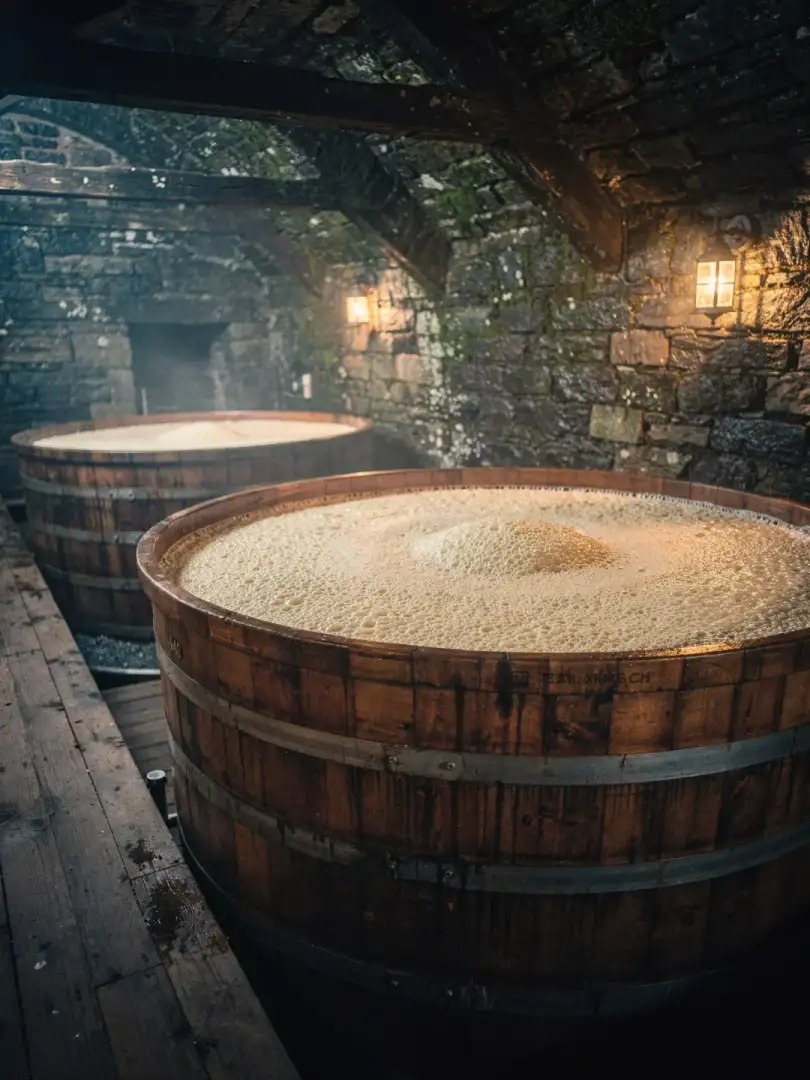
Every beer in the region is top-fermented. Top-fermenting means the yeast works at room temperature and rises to the surface during fermentation. In doing so, it produces fruity esters—aromas reminiscent of apples, pears, and dried fruit—which pair naturally with the malt's caramel notes.
Bottom-fermenting lager yeast, the kind needed for Pilsner or Helles, plays no role in the lineups of the breweries mentioned here. Scottish ales are traditionally fermented on the cooler side, which makes them rounder and less fruity than some English beers.
Fermentation setups come in all sizes. Orkney Brewery operates out of a school, Skye Brewery sits by a ferry, and Williams Bros occupies a building in Alloa that once housed the Maclay brewery. What they share is small scale: brewing happens here in manageable batches, not on an industrial scale.
With heather beer and seaweed ale, a second question arises: what happens when heather, kelp, or berries are added to the brew? The yeast only converts the sugar in the wort into alcohol. The herbs retain their aroma, and since they're used in small amounts, they barely affect fermentation.
Stronger beers like the Wee Heavy need time. The more sugar in the wort, the longer the yeast works, and the longer the beer needs to mature afterward. A Wee Heavy therefore needs weeks or months before it tastes rounded. After fermentation, the beer rests in the tank a while longer so the yeast settles and the flavor smooths out.