Garden of England
Region & History
Kent is known as the "Garden" of England, and hops are part of the reason why. Where Kentish Ale is poured today, England's first hop gardens stood in the 16th century, around Canterbury and in the Weald. Before that, people here brewed unhopped ale, sweetish and only briefly shelf-stable. Hops made the beer bitter, but also gave it longer keeping power.
In 1574, Kent native Reginald Scot wrote a handbook on hop growing, considered one of the first of its kind in England. By the 17th century, around a third of England's hop harvest came from Kent. Come late summer, families from London's East End would travel down for the harvest, arriving on special trains and lodging in simple huts. For many, it was the only holiday of the year. It wasn't until the 1950s and 1960s that machines began replacing the pickers.
The Shepherd Neame brewery sits in Faversham. It calls itself Britain's oldest brewery, citing 1698 as its founding date, though according to the brewery, brewing there likely began even earlier. Well known are Spitfire, part of the range since 1990, and the stronger Bishops Finger.
Two names carry EU protection. Kentish ale and Kentish strong ale have held protected geographical indication (PGI) status since 1996. East Kent Goldings received the stricter protected designation of origin (PDO) status in 2013. Even after Brexit, both names remain on the EU register.
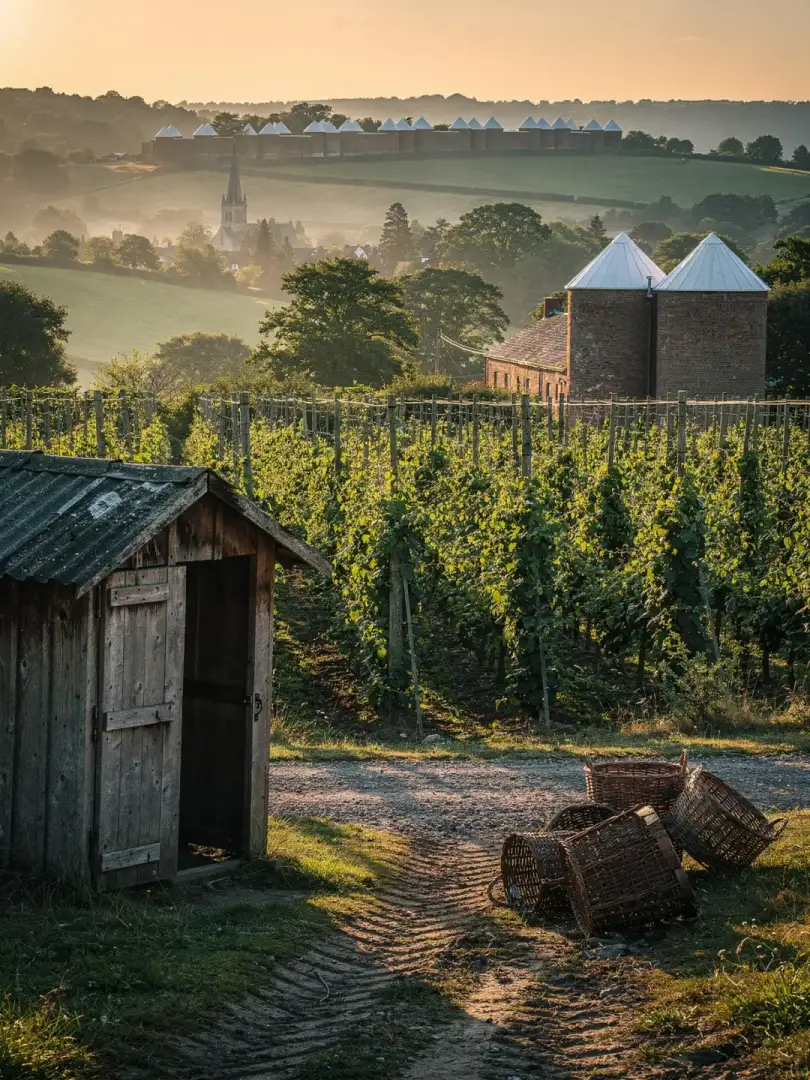
Today, alongside the traditional brewing house, Kent is home to a number of small breweries, though many hop gardens have disappeared. What remains are the drying buildings, the oast houses, and a landscape where hops are still part of everyday life.