Chalk Beneath London
Water & Soil
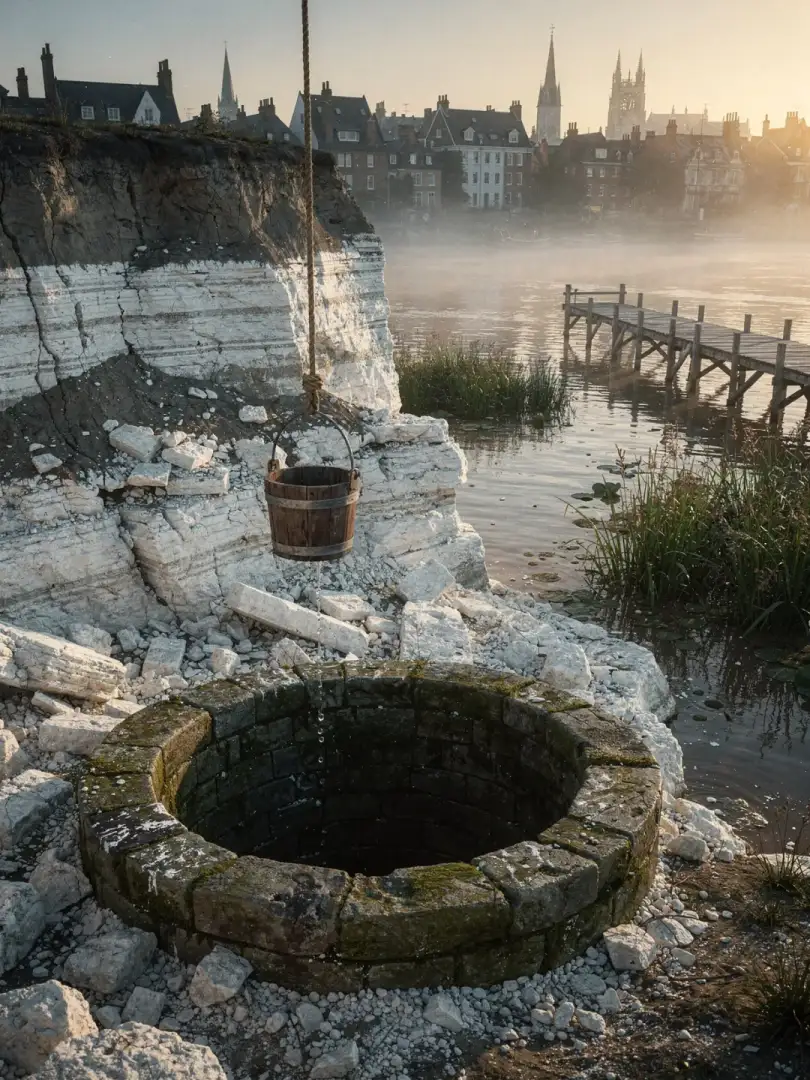
Where did the water for London's porter come from? From deep underground. Beneath the city lies a thick layer of chalk, capped by a blanket of clay known as London Clay. Brewers drilled through the clay to draw water up from the chalk below. According to British brewing historians, the majority of porter breweries sourced their water this way from underground.
Alongside this, the Thames and other rivers also supplied water. Some brewers considered well water superior because its flow was more consistent. Others happily used river water, drawing it from wherever was convenient in Southwark or along the banks. As a result, the beer varied from brewery to brewery.
Chalk-filtered water is considered high in carbonate. Carbonate, or dissolved lime, makes the mash less acidic, which suits dark malt well since dark malt already brings its own acidity. Pale malt combined with carbonate-rich water, by contrast, quickly turns harsh and flat. This is why dark porter made such natural sense in London, and this very connection is often cited to explain why the city became known for porter rather than pale beers.
That's history now. Like most breweries, Fuller's in Chiswick and London's smaller houses treat their water today, adjusting hardness or adding salts to suit the style. The city's climate, however, still plays a role in the beer served at the pub. The cellars are cool and damp, but not freezing. This is where the casks rest before reaching the tap, and that mild cellar warmth suits English ales, which are never meant to be served ice-cold.