Soft Highland Water
Water & Soil
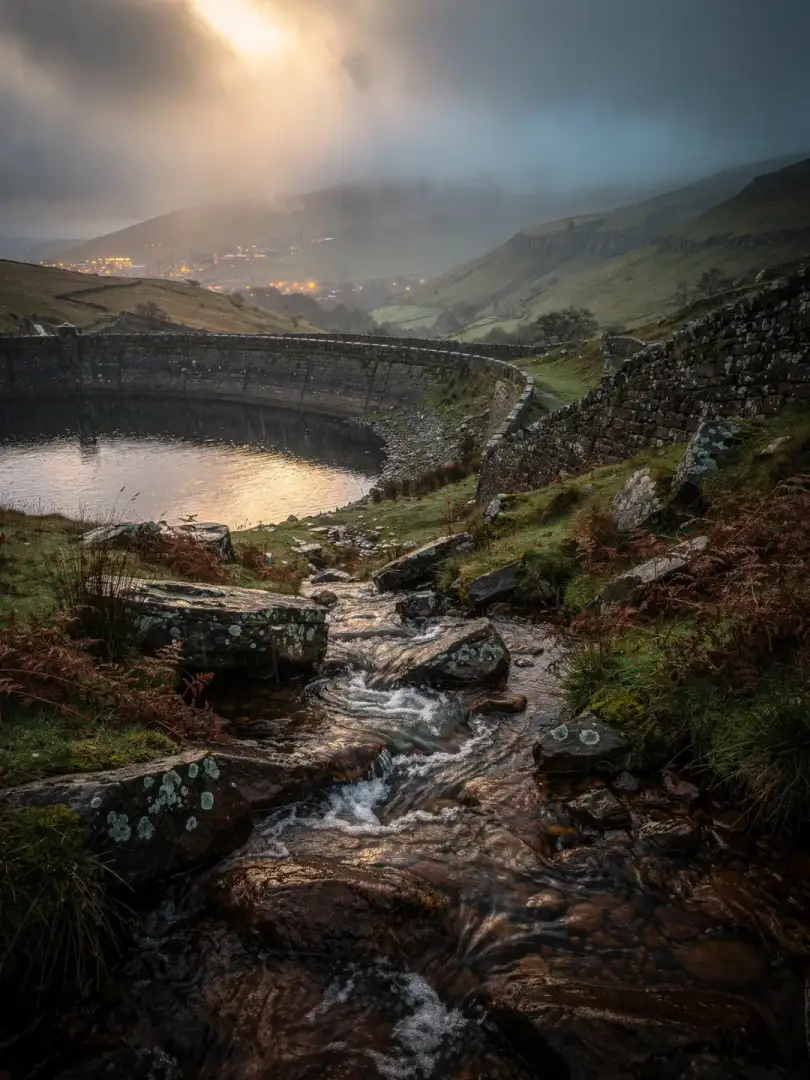
What kind of water suits mild and bitter? In Northwest England it rains often, and the water flowing down from the hills of the Pennines and the Lake District into the cities is considered relatively soft. Soft means low dissolved lime and few minerals, unlike Burton, where hard, gypsum-rich wells once defined the picture.
This has consequences for the beer. Soft water lets malt and hops come through more clearly, since no salts interfere. Sulfate and chloride in particular shape the impression: sulfate accentuates bitterness and gives a dry finish, while chloride rounds things out and gives the beer more body. A dark mild thrives on that roundness.
Today, almost every brewery treats its water. They soften it, filter it, or add salts deliberately to achieve the profile a given style demands. The idea that water alone defines a style belongs to the past. In a densely built city like Manchester, every brewery draws its water from the mains anyway and shapes it to taste.
More important here than the terrain is the cellar. The beer from family brewers like Robinsons is served as cask ale, poured straight from the cask in the pub's cellar, where it's kept cool but not ice-cold. A dark, brick-built room beneath the taproom keeps the temperature stable year-round, with little effort needed in the Northwest's damp, cool climate. Cellar work is the landlord's job, not the brewery's.
The climate shapes drinking habits, too. A cool, wet day calls for a beer that won't weigh you down. Dark mild at around three percent alcohol can be enjoyed glass after glass over an evening without clouding the head.