Rain and Rock
Water & Soil
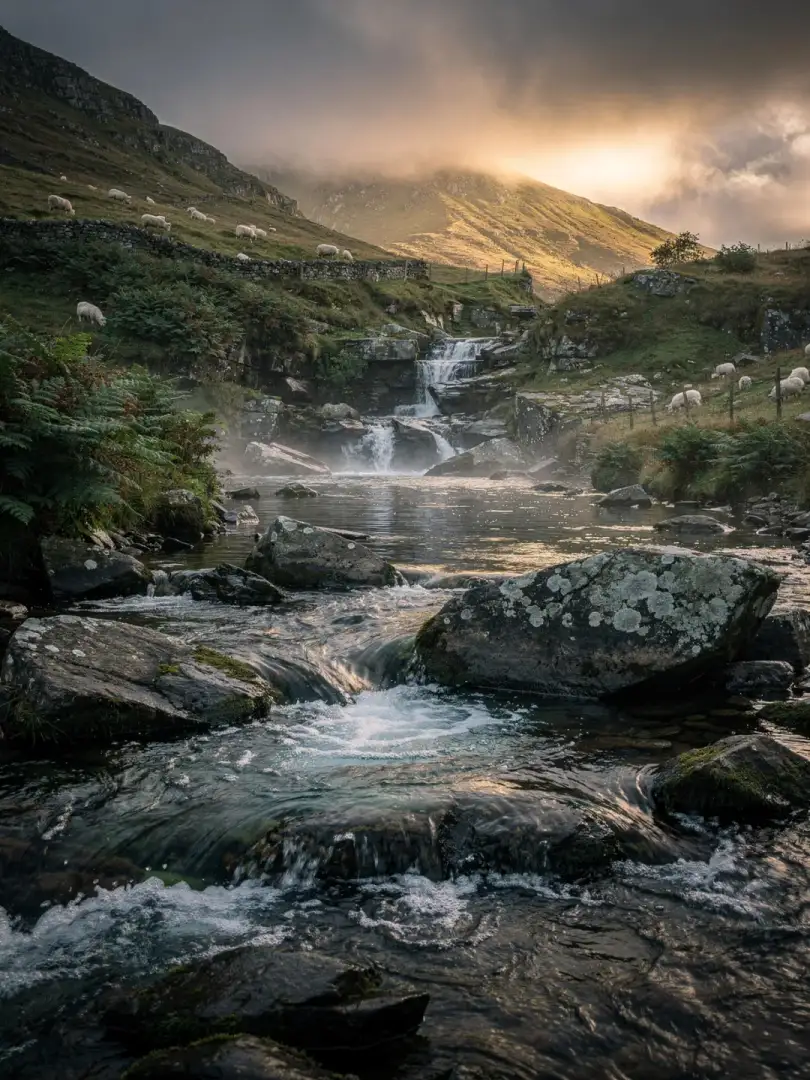
What kind of water does a Welsh bitter need? Fairly soft water, since the damp west coast and the ancient, hard rock of Snowdonia and the Cambrian Mountains yield rainwater that dissolves hardly any minerals from the ground. There are no exact hardness figures for individual breweries here, which isn't a problem, since most brewers treat their water anyway.
Soft water lets the bitterness in the glass come across as clean and rounded. Harder, carbonate-rich water, as found in some industrial valleys, tends to emphasize dark malts instead. That works well for a dark mild, since the carbonates buffer the acidity of the roasted malts. With a pale bitter, though, nothing should taste dull, which is why brewers adjust their water specifically for that style.
The soil of South Wales bears the mark of coal. Between the narrow valleys and the port of Cardiff lie sandstone, shale, and coal seams. Mining history built the towns where so many pubs later stood. The Brecon Beacons to the north are made of red sandstone, and their streams are considered a key water source for the region.
The climate is kind to the cellar. The Atlantic keeps summers cool and winters mild, so a pub cellar stays at a steady ten to twelve degrees Celsius without much technical help. That's ideal for cask ale, which matures in the cask and isn't pasteurized. If the cellar temperature swings too much, the beer suffers, which is why the region's even, maritime weather is a real advantage for any publican. What happens next is covered in the section on yeast and fermentation.