Cauvery & Granite
Water & Soil
How does a city on a high plateau get its brewing water? Bengaluru lies far from any major river. Most of the tap water is brought into the city by the water utility BWSSB from the Cauvery River, supplemented by water from the Arkavathy River. It isn't enough for everyone: residents in the outer districts often rely on borewells and water tankers.
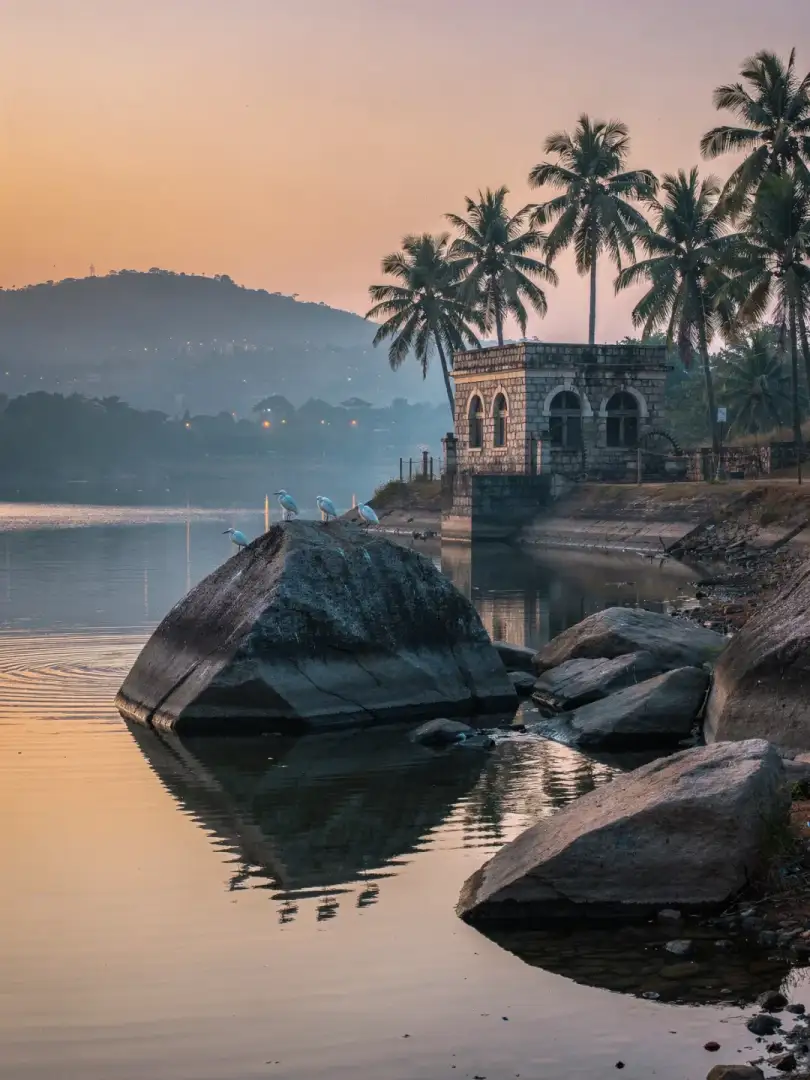
Beneath the city lies ancient rock. Granite and gneiss form the bedrock of the plateau, lending the groundwater calcium and magnesium. Well water is therefore usually harder than treated river water, a difference households offset with filters. There are no reliable measurements for any particular brewing water, and they would tell you little anyway.
That's because, in the brewpubs, tap water doesn't dictate the style. As almost everywhere in the world, brewers treat their water: filtering it, demineralizing it, and adding salts deliberately. A pale lager needs soft, mineral-poor water, while a robust pale ale can handle more sulfate — and both can be dialed in at the brewhouse, whether the source is the Cauvery or a well.
Heat matters more. The elevation keeps the climate moderate, yet temperatures still climb in spring, and breweries actively cool their fermentation tanks. No one here has a rock cellar like those in Franconia: the beer matures in stainless steel tanks with cooling jackets, and the cold room stands in for the mountain.
Every brewer in Bengaluru feels the water scarcity: the city has struggled with its supply for years, and a brewery needs large amounts of it for wort, cleaning, and cooling.