Ale at Room Temperature
Yeast & Fermentation
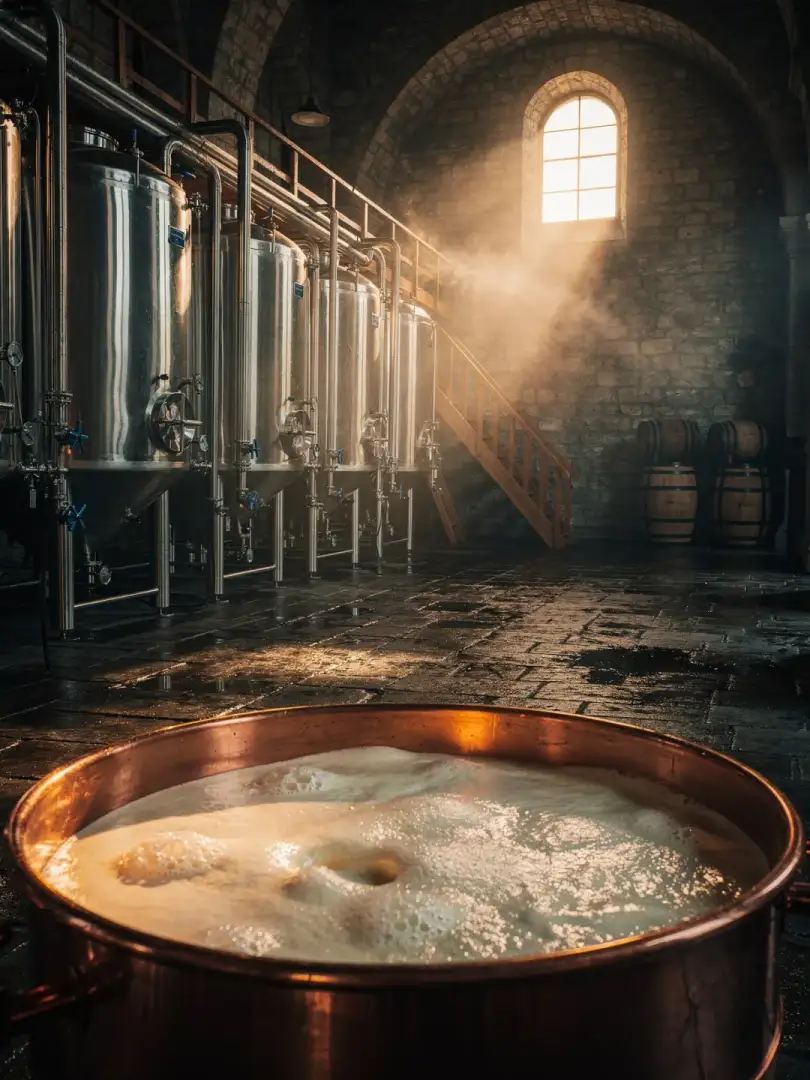
Is Irish Red Ale top-fermented? Yes. The yeast works at temperatures familiar from room settings, usually between about 18 and 20 degrees Celsius, rising to the top of the fermentation vessel as it works. Such an ale ferments within a few days, and maturation then takes another few weeks. This sets it apart from a lager, which ferments colder and longer.
Top-fermenting yeast produces aromatic compounds in the warmth, known as esters. They bring to mind pear, apple, or light fruit. In a Red, these stay subtle so as not to drown out the caramel and roasted barley. The style guidelines call for a clean yeast profile with just a touch of fruitiness.
A Red doesn't need long aging. After fermentation, it typically rests in the tank for a few days to a few weeks, clears, and is then bottled or kegged. A cool cellar, like those found beneath Kilkenny's old stone houses in the old town, is handy for this but not essential.
Carbonation matters. A Red on draft has less of it than a pilsner, giving it a softer mouthfeel. Some brands, including Kilkenny Irish Beer, are poured with nitrogen. This makes the bubbles tiny, the foam creamy, and the first sip velvety. Here too, the yeast stays in the background—its work is long done. You only notice it when it's missing, because without clean fermentation a Red would quickly turn sickly sweet, sticky, or buttery. That's why brewers insist on fresh yeast, clean equipment, and a steady temperature, so the result tastes the same every time.