Þorri & Hot Dogs
Food & Beer Culture
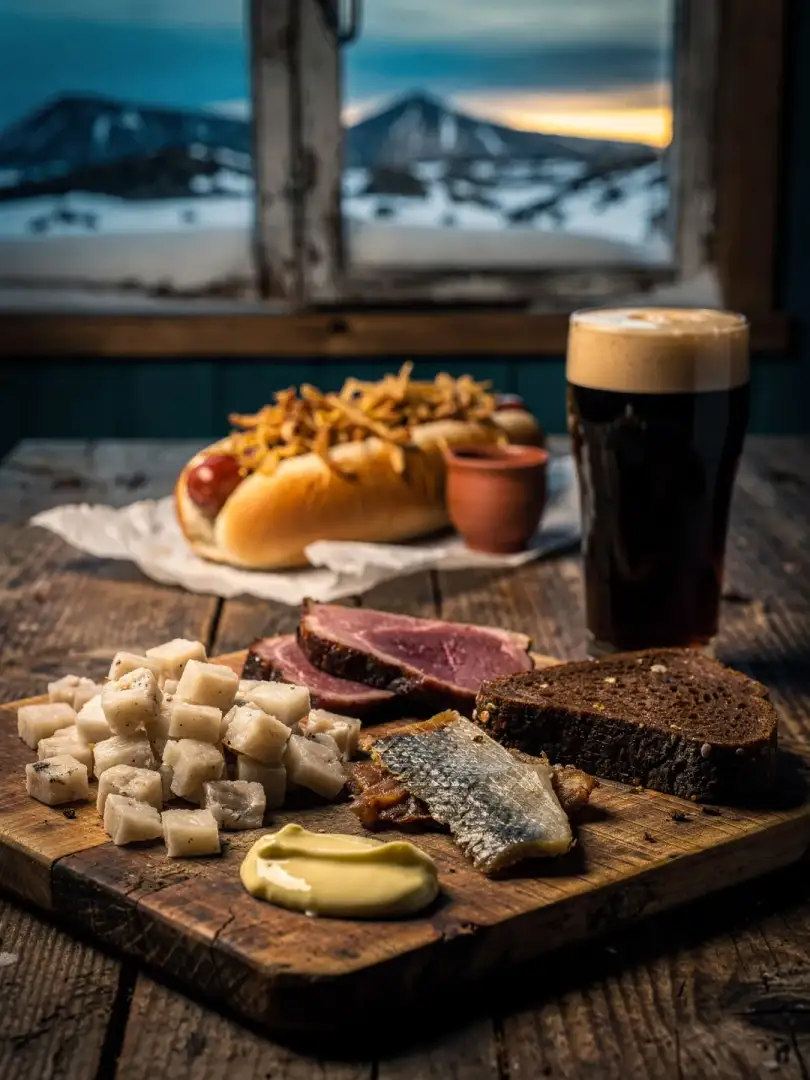
What do Icelanders eat with their beer? In midwinter, mainly Þorramatur, the food of the month of Þorri, between mid-January and mid-February. At Þorrablót, the table is set with Hákarl, fermented shark, Hangikjöt, Svið, singed sheep's head, and Harðfiskur, along with Brennivín, a caraway-flavored schnapps, and beer.
Fatty, salty, and strongly flavored food calls for beer. Lager cleanses the palate, Pale Ale stands up to the fat of the Hangikjöt, and a smoky Stout picks up on the smoky note of the meat. Hákarl tastes strongly of ammonia, and a cold beer helps wash the taste away afterward.
After Þorrablót, something simpler is called for, and Icelanders have the hot dog for that. At the stands in Reykjavík, it's made with lamb and topped with crispy fried onions and remoulade. A pale lager pairs especially well with it.
Bars make up a big part of the beer culture. Since Bjórdagur in 1989, many small pubs with their own taps have opened in Reykjavík, with breweries featuring taprooms following in Akureyri and the south. Guests include locals and plenty of travelers alike.
A controversial case from the Þorri season is the whale beer from the brewery Steðji. In early 2014, it brewed Hvalur 1 with whale meal in collaboration with Hvalur hf., a whaling company. The ministry banned it, since Hvalur hf. did not have a permit to sell whale meal. In 2015, Hvalur 2 followed, made with smoked whale testicles. Conservation groups criticized the beers for serving the interests of the whaling industry.