From Afar
Hops
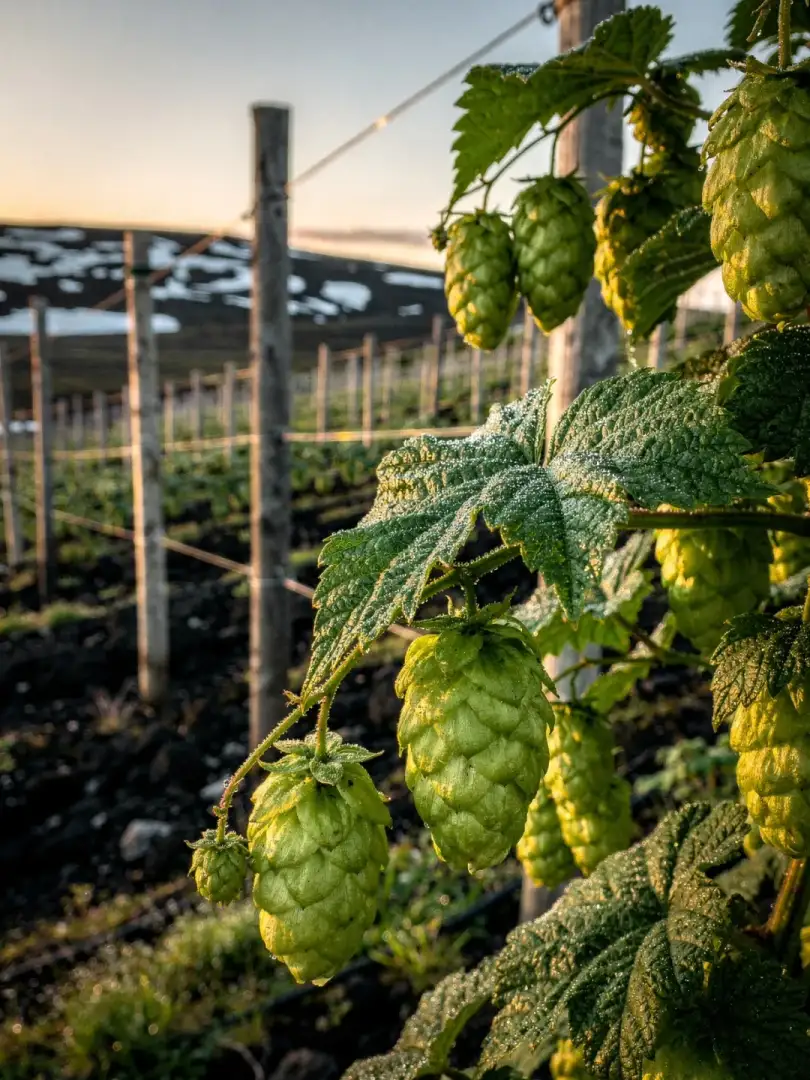
Hops don't grow in Iceland's fields, at least not for breweries. The climate is too cool, summers are too short, and the wind too harsh. All brewers source their cones or pellets from hop-growing countries like Germany, the Czech Republic, and the US.
This has an advantage. Iceland has no native hop variety that breweries are tied to, and each brewery can choose freely. Einstök names Cascade, Northern Brewer, and Hallertau Tradition for its Arctic Pale Ale: an American, an English-German, and a German variety.
Cascade brings citrus and floral notes, it's an aroma hop. Northern Brewer brings bitterness and a slightly resinous tone. Hallertau Tradition adds a mild, spicy note. Together they create a Pale Ale with 5.6 percent alcohol, with mild caramel and plenty of hop aroma.
The difference between bittering and aroma matters in every beer. Bitterness comes from alpha acids, which only become soluble when the wort is boiled. Aroma comes from essential oils, preserved through late kettle additions or dry hopping in the tank.
For a Czech-brewed lager like Kaldi's, which the brewery says follows Bohemian brewing tradition, hops play more of a supporting role than a lead one. In the Pale Ale scene of Reykjavík's breweries, however, hops take center stage, as in many young breweries following the US craft beer model. Transport is long, so brewers mostly buy hops as pellets, which store well and take up less space than whole cones.