Gentle Bitterness, Citrus
Hops
Does hops grow in Friuli? Hardly worth mentioning. Unlike the Hallertau or Saaz regions, Italy has no hop-growing heartland, and no Italian hop variety appears in the EU's protected-origin register. Breweries in Feltre, Udine, and San Giorgio buy their hops from other countries, usually as pellets or extract, which store well.
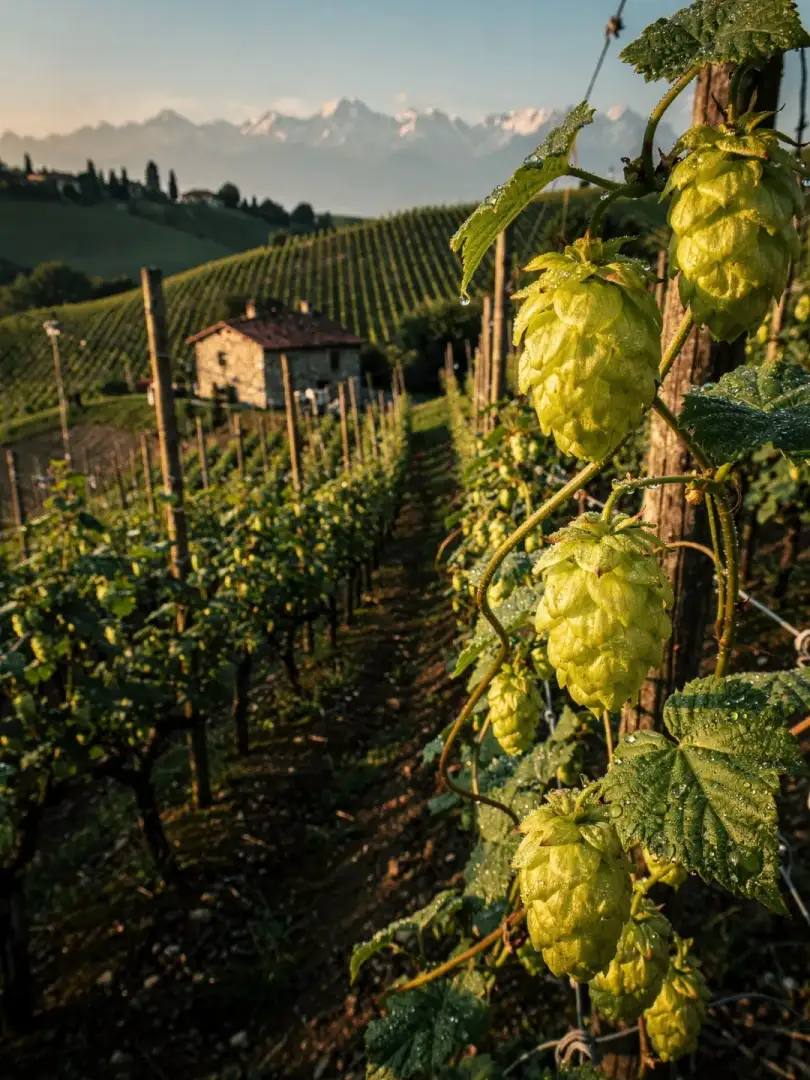
Hops bring two things to beer: bitterness and aroma. The bitterness comes from the alpha acids in the cones and is measured in IBU, international bitterness units. The aroma comes from essential oils, which partly evaporate during boiling and are therefore often added late.
An Italian pale lager keeps bitterness low. For this style group, the BJCP competition guidelines list roughly 18 to 25 IBU, while a German pils sits noticeably higher at 22 to 40 IBU. This makes the beer rounder and easier to drink with food.
The craft scene works quite differently. Birrificio Bondai in Sutrio, at the foot of Monte Zoncolan in Carnia, brews a pale ale called Point Break that the brewery describes as double dry-hopped (DDH), with a citrus aroma. In dry hopping, the hops go into the beer only after primary fermentation, adding aroma without extra bitterness.
So in Sutrio and Feltre, the gentle industrial lager sits side by side with the fragrant pale ale. Both rely on imported hops, and both show what selection and timing of hop additions can do with a single plant.