Lager and the Langhe
Region & History
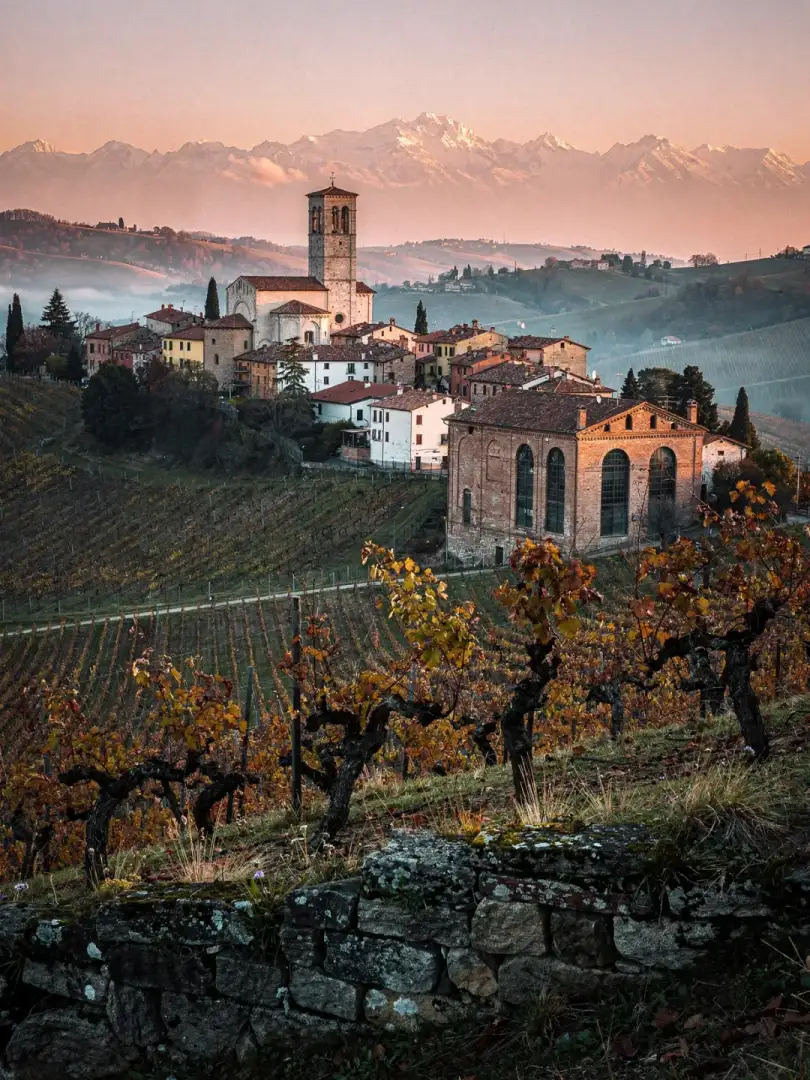
Piedmont means "at the foot of the mountains," and that's exactly where it lies: the Alps mark the border to the west and north, while the hills of the Langhe stretch out to the south. Here grow Nebbiolo, Barbera, and Dolcetto, and here stand the wine villages of Barolo and Barbaresco. It was in this very wine country that Italy's beer culture was reborn.
The oldest thread is spun by Birra Menabrea in Biella, at the edge of the Alps. The brewery traces its founding to 1846 and is considered Italy's oldest still-operating brewery. According to its own account, rock cellars in the mountain, where a lager could age coolly, drew the first brewers to the spot. For generations it remained an everyday bottom-fermented beer.
The second thread is young. In 1996, Teo Musso, born in 1964 in Carrù and raised in Piozzo, opened his brewpub Le Baladin there — a tavern with its own brewing setup. In 1997 he bottled Isaac and Super, the first two Italian craft beers to be bottled. He sent samples to 500 restaurants he found listed in a Slow Food guide.
Slow Food, founded nearby in Bra in 1986, gave beer its stage: those who valued good food should find it in the glass too. Out of this closeness to kitchen and winegrowers grew the idea, around the year 2000, of adding grape must to beer. Teo Musso's Perbacco, made with Dolcetto must, is considered the forerunner of Italian Grape Ale.
The term "Italian Grape Ale" was adopted by the BJCP style guidelines in 2015, making it the first beer style of Italian origin. No Piedmontese beer carries EU protected-origin status; the style name is simply an industry convention. Alongside the two big names, there are now many small operations today, often run by winemakers and farmers.