Limestone and Rain
Water & Soil
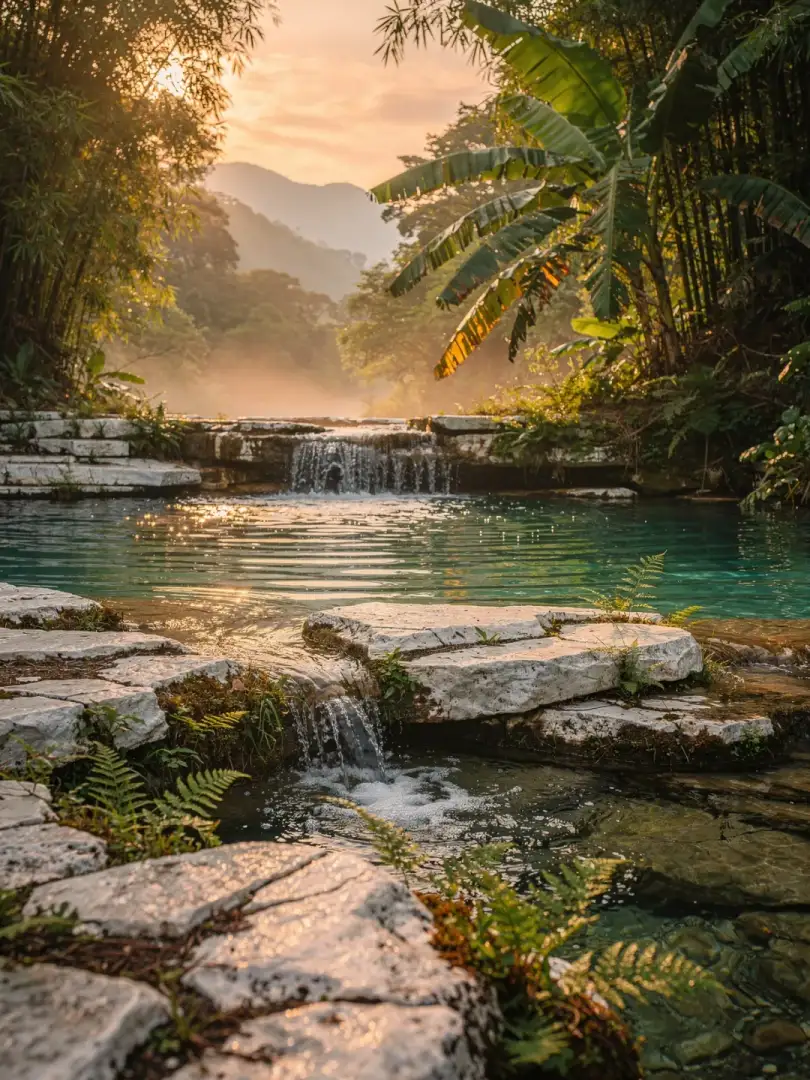
Where does the brewing water in Kingston come from? A large part of Jamaica consists of limestone, a rock that absorbs rainwater like a sponge and releases it slowly. According to accounts surrounding the brand, the water for Red Stripe comes from the island itself and passes through such limestone layers beforehand.
Limestone makes water hard. Hard water contains a lot of dissolved calcium and bicarbonate, which dampens the acidity of the mash, the mixture of malt and hot water. For pale beers this is rather awkward, but for dark and roasted malts it's welcome, because their acidity balances out the hardness. No specific hardness figures for Kingston's brewing water are available here, so none are given.
The city itself sits on a bay in the south of the island, below the slopes of the Blue Mountains. Heavy rain falls there in some months, while others turn dry. What the rock cellar does for beer in Central Europe, technology handles here: without refrigeration, a lager would not stay what it's meant to be in a tropical climate.
Anyone standing on Spanish Town Road for the first time sees mainly tanks, pipes and loading bays; no well, river or spring is visible from the street anywhere. Besides the water for the brew itself, a brewery needs plenty of rinsing water and refrigeration. A brew comes together in hours, but cleaning the tanks and lines often takes longer. In a warm country this is especially important, since germs multiply faster in heat, and a brewery must keep wild yeasts and bacteria at bay.