Barley from the Island
Malt & Grain
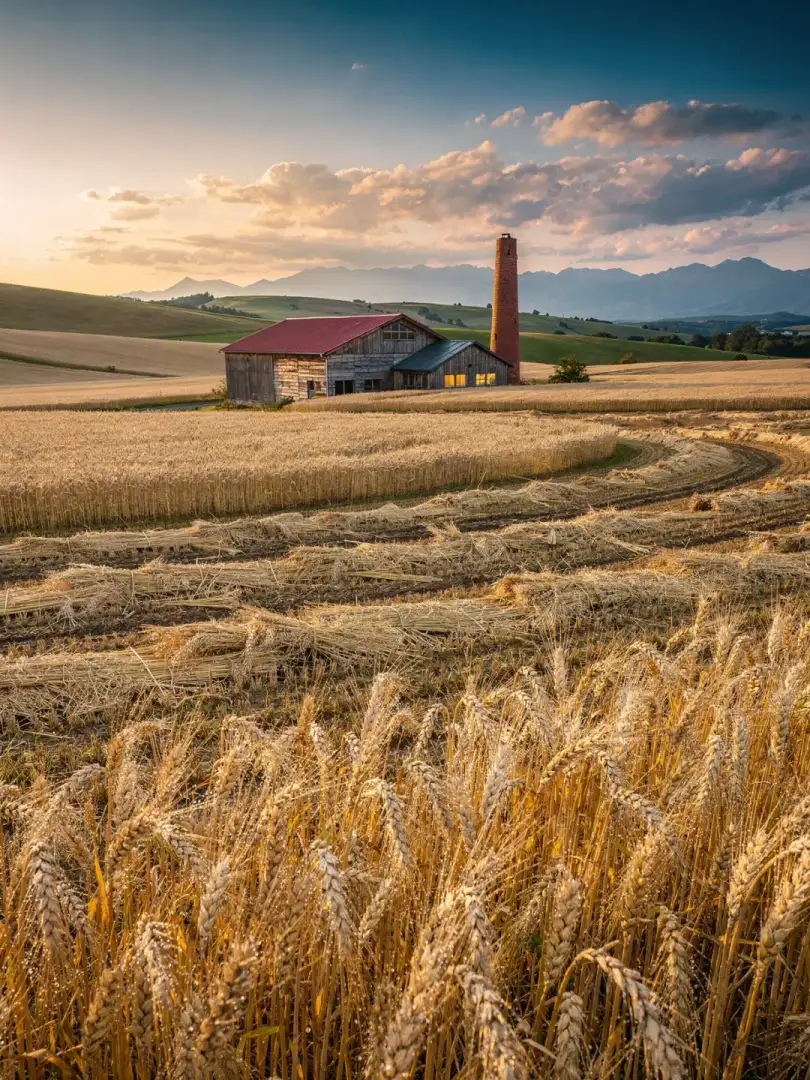
Ask in Sapporo where the barley comes from, and you'll often hear two place names. For Sapporo Draft Beer Black Label's "The Hokkaido" variety, the brewery cites malt from the Furano area and the Okhotsk region. Both lie inland and along the northeastern coast.
Barley has been part of the plan here since the brewery's founding. Even Kuroda Kiyotaka didn't want to depend on imports and insisted on Hokkaido barley. Sapporo still emphasizes today that it breeds and sources barley together with its farming partners.
Brewing starts with malt. Malt is grain that's allowed to germinate and is then dried in a kiln, which develops sugar and flavor. For pale beers, the kilning is gentle, so the beer stays light-colored and tastes of bread or biscuit rather than roasted notes.
In pale Japanese lager, besides barley malt, adjuncts like rice or corn are common, making the beer leaner and drier. How much of each a brewery uses varies by style and is listed on the label.
The small breweries add their own touches. Okhotsk Beer in Abashiri cites two-row barley from Tanno-chō, a town in the region. Two-row means the ear carries two rows of grains. It yields larger kernels and is considered a classic brewing barley. That the brewery names the barley's origin so specifically shows just how strongly Hokkaido is meant to shape the beer's identity.