Warm, Fast, Clear
Yeast & Fermentation
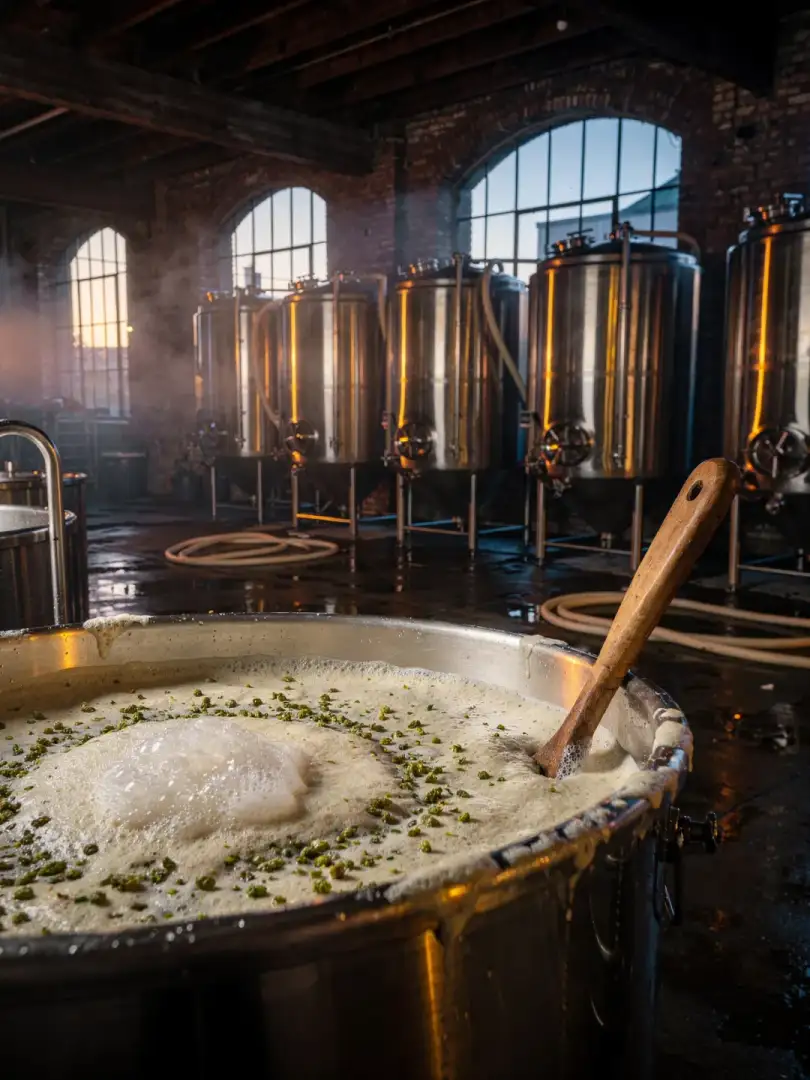
Nearly all brewers in British Columbia work with top-fermenting yeast. Top-fermenting means the yeast works at room temperature and ends up collecting at the top of the fermentation vessel. The advantage is speed: an ale is ready in one to two weeks, while a lager often takes twice as long.
That suits breweries that often only have a handful of tanks. The faster a tank frees up, the more batches a small operation can run in a season. It also explains why so many styles can be tried out in the province: if a recipe doesn't work, only a few weeks are lost. Seasonal brews and one-off recipes become economically viable for small operations this way, too.
Typical fermentation temperatures sit around 18 to 20 degrees Celsius. At these levels, some yeasts produce light fruity esters that complement the hop aroma. A West Coast IPA, by contrast, should taste clean and crisp, so brewers choose neutral strains that show little character of their own and ferment the sugar almost completely.
After that, the hops get another turn. In dry hopping, cones or pellets sit in the tank in the cold, without being boiled. This lets the delicate aroma get into the beer without adding extra bitterness.
Finally, the beer is cold-conditioned so that yeast and haze particles settle out, making it clear. With a hazy IPA, it's the opposite: the haze is meant to stay. Walking through a tasting room in Vancouver, on Granville Island, or in Kelowna, you'll often see these tanks right behind the counter, and the brewer is usually happy to explain which yeast is working in them at the moment.