Prohibition and a Fresh Start
Region & History
Why does Ontario have such unusual rules for selling beer? The answer lies in the year 1916. That's when the Ontario Temperance Act took effect, largely banning the sale of alcohol. Beer didn't return until 1927, this time under state supervision: that year saw the creation of the Liquor Control Board of Ontario, known as the LCBO. At the same time, the brewers founded a joint sales company that would later become The Beer Store.
The oldest line still running today leads to London, Ontario. There, in 1847, Irish immigrant John Kinder Labatt took over a small brewery, first with partner Samuel Eccles, then alone from 1854 as the London Brewery. In 1995, Belgian brewer Interbrew bought the company, and in 2008 it passed into the hands of Anheuser-Busch InBev through a merger.
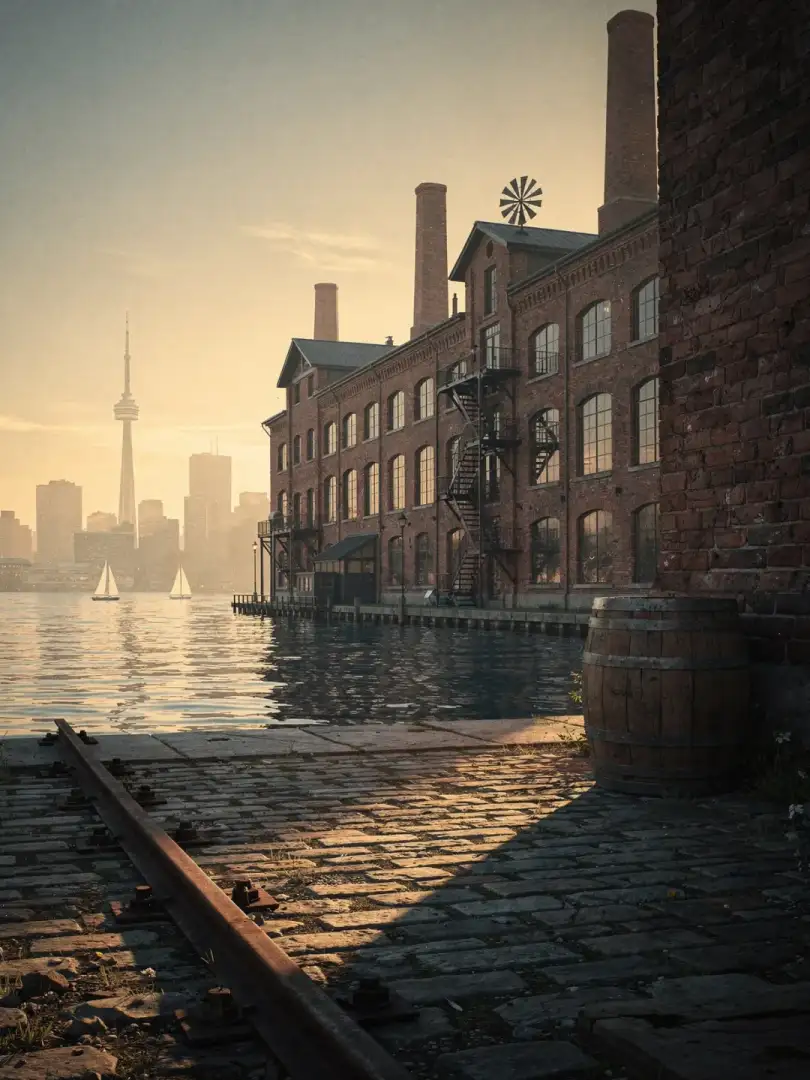
In Toronto, the story of drinking leans more toward whisky. In 1832, brothers-in-law James Worts and William Gooderham built a windmill on the shore of Lake Ontario, which later grew into one of the largest distilleries in the world. The last time alcohol was produced here was 1990. Since 2003, the complex has reopened as the Distillery District.
Today's scene is shaped by smaller operations. Muskoka was founded in 1996 in Bracebridge, Steam Whistle in 2000 in Toronto, started by three former employees of the Upper Canada Brewing Company. In 2003, small breweries joined forces, eventually forming Ontario Craft Brewers. Industry figures suggest more than 250 breweries now operate across the province, in over 110 communities.
Retail has also been overhauled recently. In 2024, the provincial government opened up corner stores and supermarkets to beer sales, breaking with nearly a hundred years of practice. What that means day-to-day is covered in Station 8.