Ale or Lager
Yeast & Fermentation
What decides whether a beer is an ale or a lager is the yeast. Ale yeast ferments at the top, at around 18 to 22 degrees Celsius, producing fruity byproducts along the way. Lager yeast ferments at the bottom, at around 8 to 12 degrees, leaving behind a very clean beer. The terms come from the brewery itself: top-fermenting yeast collects at the top of the fermentation vessel, bottom-fermenting yeast settles at the bottom.
Cream Ale is a special case. The style is called an ale, but according to the BJCP it's also fermented with lager yeast or at cool temperatures, then cold-conditioned afterward. The result tastes clean like a lager but keeps the body of an ale. Such hybrid styles have deep roots in North America: they emerged in the 19th century, when brewers introduced lager yeast but still wanted to serve ale drinkers. The middle path was warm fermentation followed by long, cold conditioning.
Steam Whistle, by contrast, brews exclusively a Pilsner, meaning bottom-fermented. Fermentation runs cold and slow, then the beer conditions in a lagering tank so the yeast can clean things up. The colder and longer the beer conditions, the clearer and rounder it becomes. Fresh out of the fermenter, it often tastes of green apple, a sign the yeast is still at work.
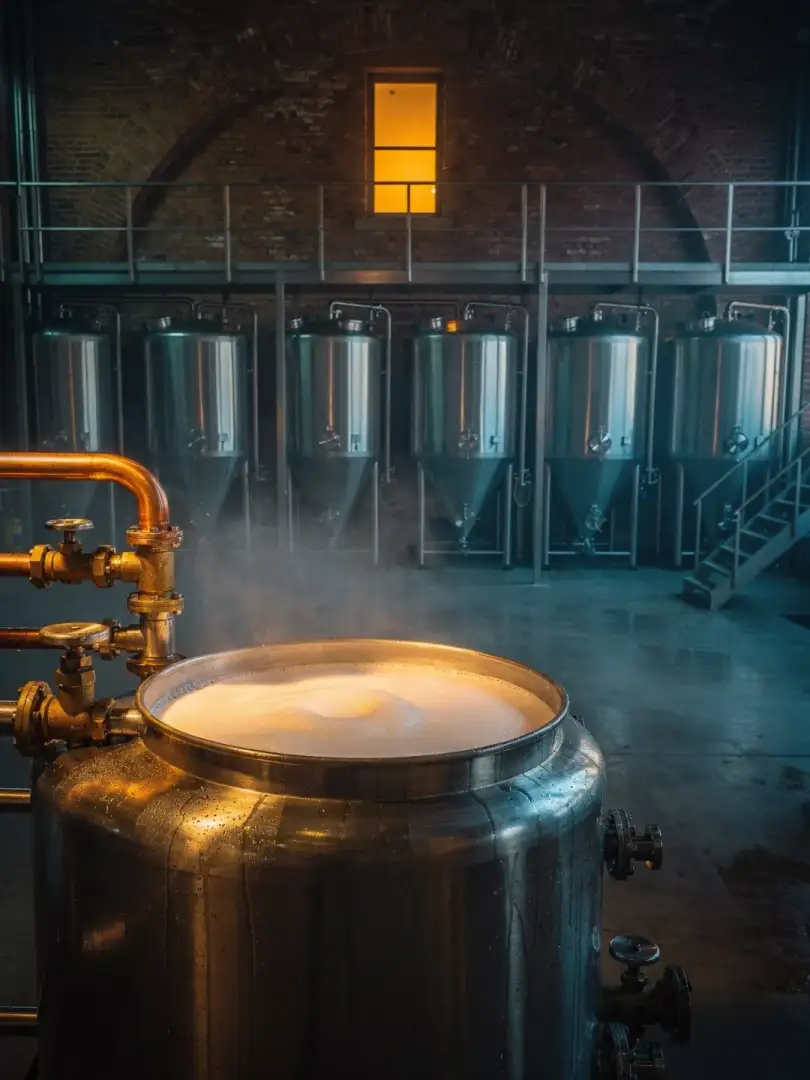
At large breweries like Labatt in London, Ontario, fermentation takes place in massive stainless steel tanks monitored by computer. That keeps the flavor nearly identical from batch to batch, and brewers can fine-tune temperature and time down to the degree and the hour if needed.