Cooling in Summer
Yeast & Fermentation
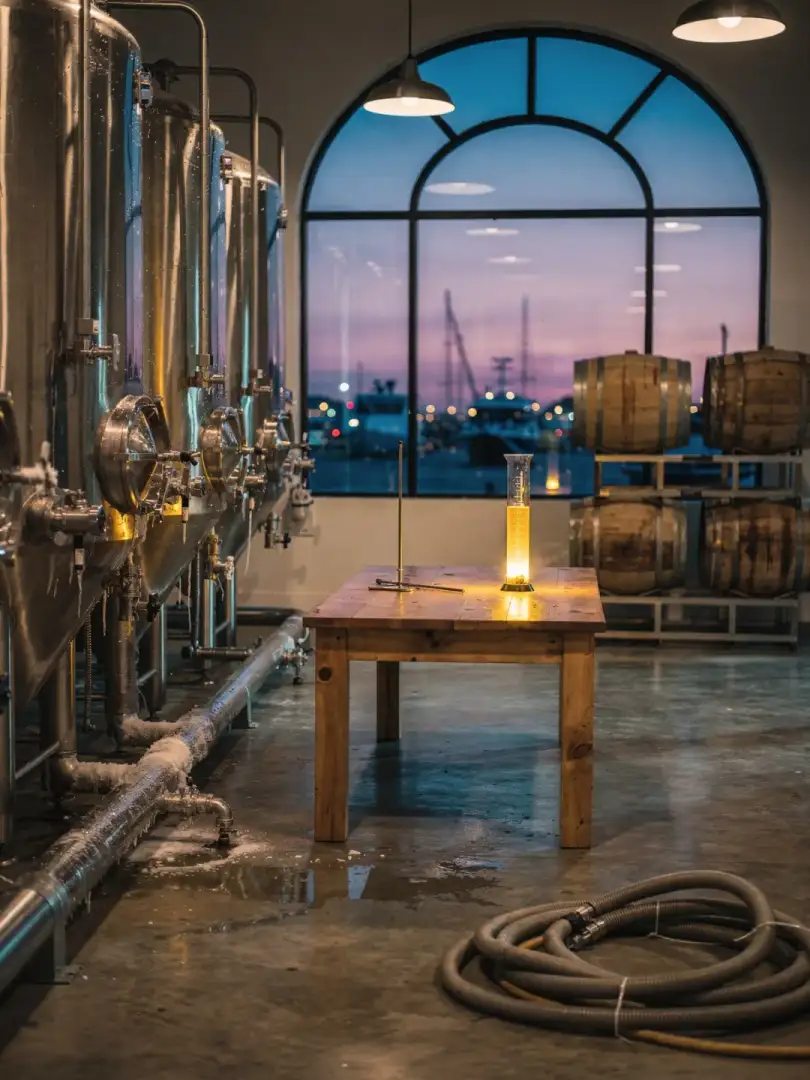
The biggest brewing challenge in Baja is heat. At temperatures above 40°C (104°F) in Mexicali, any yeast ferments too fast and produces off-flavors unless it's kept cool. That's why fermentation tanks almost everywhere sit in cooled rooms or come fitted with cooling jackets through which chilled liquid circulates.
Mexican lager is bottom-fermented. The yeast works at cold temperatures and settles to the bottom when finished, after which the beer matures for several weeks at near-freezing temperatures. This lagering period gives the beer its clarity and smoothness. It demands plenty of tank space and significant electricity for cooling, one reason many small operations shy away from it. Incidentally, lager yeast is a cross between two species that first came together in European breweries centuries ago.
Most craft breweries work with top-fermenting yeast instead. It ferments at higher temperatures, often around 18 to 20°C (64 to 68°F), and needs just over a week. This suits the fast-rotating selection of styles on tap that taprooms in Ensenada and Tijuana love to offer.
Open fermenters or wooden barrels are rare here. Stainless steel dominates because it's easy to cool and clean, keeping the yeast firmly under control. After fermentation, the beer is chilled for clarity, filtered, or simply left to settle until yeast and sediment drop out. It then goes into kegs or cans. There's also a practical reason behind all this: controlling temperature lets brewers deliver consistent quality even during heat waves. A brewer in Mexicali, in other words, needs to master refrigeration technology before even thinking about recipes.