Warm, Hazy, Fast
Yeast & Fermentation
Hops only become beer in the fermenter. The region's beers are largely top-fermented, meaning the yeast works warm, at around 18 to 20 degrees Celsius, and rises to the surface. Such yeasts produce fruit esters, volatile aroma compounds reminiscent of pear or peach, which combine with the hops.
Alongside this stands the lagering tradition. Mac's Gold was a golden lager, meaning a bottom-fermented beer that ferments cooler and slower and tastes cleaner. Among the region's craft brewers you'll find pilsners and lagers brewed with Nelson hops, showing that hop aroma isn't bound to ale alone.
Hazy IPAs, the cloudy beers, need a second step. The hops are added to the tank a second time after primary fermentation has settled. This dry hopping brings fruit oil into the beer without adding bitterness. Here, yeast and hop oils work together, producing a fruitiness that's hard to attribute to either ingredient alone. This interplay is especially intentional with Nelson Sauvin and Motueka, since their aroma would otherwise be lost in the fermenter.
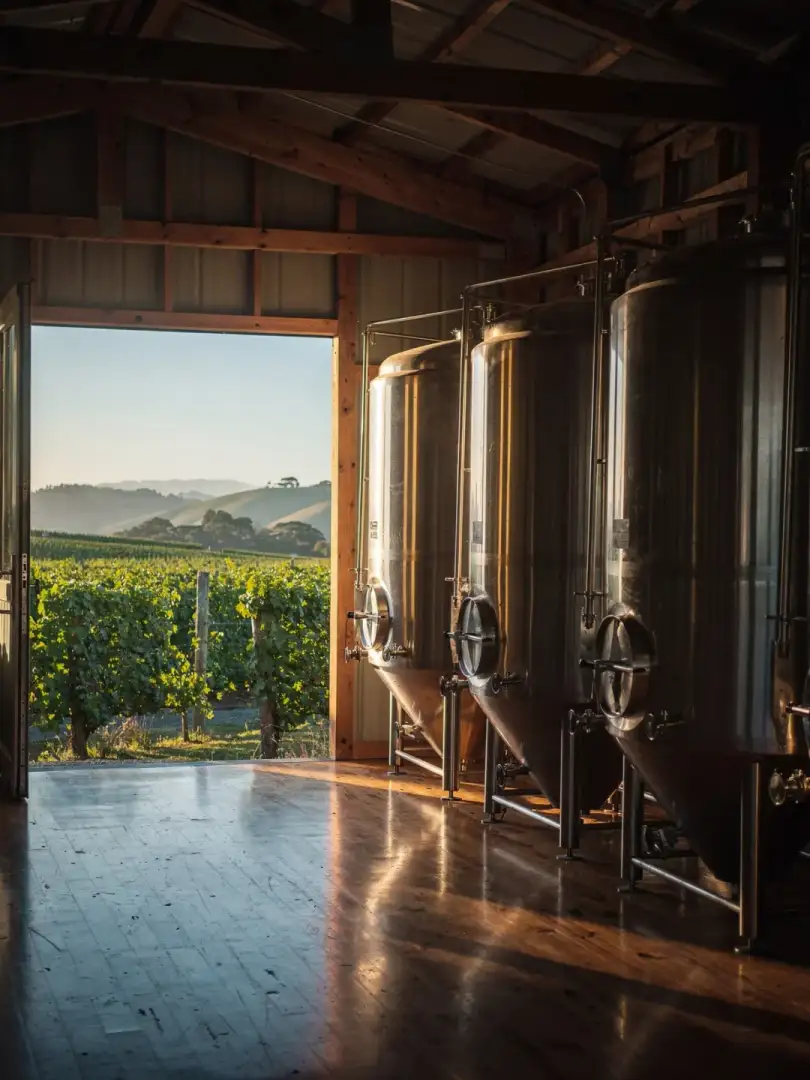
Maturation is short. A Pale Ale is often drinkable within a few weeks; a lager takes a bit longer. Aging happens in stainless steel tanks, not wooden barrels, because the hops should be heard loud and clear. The fresher the beer is drunk, the livelier it tastes, since hop aromas fade over time. A mental image of Tasman Bay helps with the comparison: just as the sea looks clear and cool in the morning, beer from the tank should taste the same way.