Seidel and Weißbier Glass
Tasting
What does Innviertel beer taste like? A Märzen from Ried or Baumgartner tastes round and malty, with a clean, slightly bitter finish. A Zwickl is softer and more bready, while the Rieder Weisse is fruity and fresh with banana on the nose. These are flavor examples, not ratings, and they apply to the standard beers, not to every special edition a brewery might release.
On the first sip, it's worth taking a look at color and foam. The Märzen gleams golden to copper and wears a firm white crown, while the wheat beer is hazy and throws a tall, creamy head. Then comes the aroma: malt and bread for the Märzen, banana and clove for the Weisse.
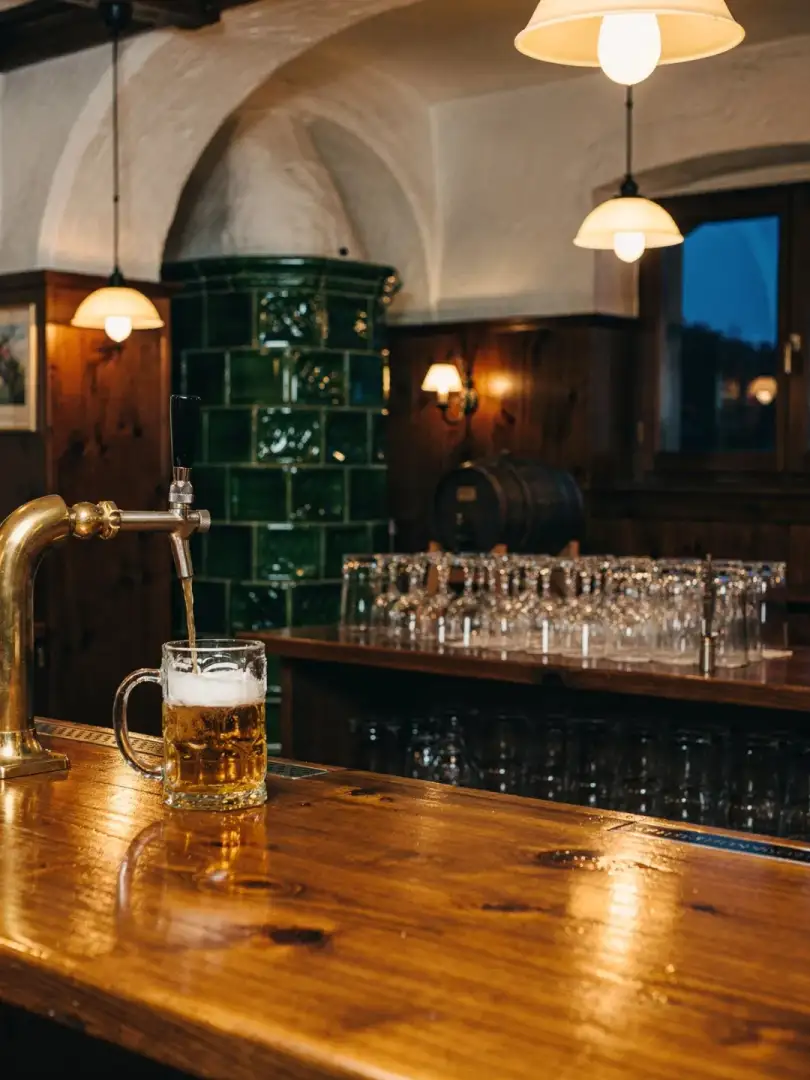
In Austrian inns, beer is usually served in a Seidel (0.3 liters) or a Krügerl (0.5 liters), while wheat beer comes in the tall, flared Weißbier glass. It has room for the foam and lets the yeast show through.
Temperature makes a real difference. Too cold, and the flavor shuts down; a Märzen tastes best at around 7 to 9 degrees Celsius, while the Weisse can be served one or two degrees cooler. For wheat beer, there's also a trick: tilt the glass slightly, pour slowly, swirl the bottle to loosen the remaining yeast at the bottom, and add it to the glass last.
Anyone tasting several beers should start with the lightest and finish with the strongest. Water belongs on the table too. The best time to catch the region's Biermärz events, with local dishes paired alongside, is in March, when inns and breweries across the Innviertel take part.