Cold and Slow
Yeast & Fermentation
The beers of the region are predominantly bottom-fermented, meaning the yeast works at cool temperatures of around eight to twelve degrees Celsius and settles to the bottom at the end. The result is a clean, calm beer. Top-fermented beers do exist here, but they remain the exception.
After primary fermentation comes lagering. During this stage, the young beer continues to mature in the cold for weeks, the yeast settles out, and rough off-flavors fade away. For stronger beers in particular, this takes considerably longer than for a light Zwickl.
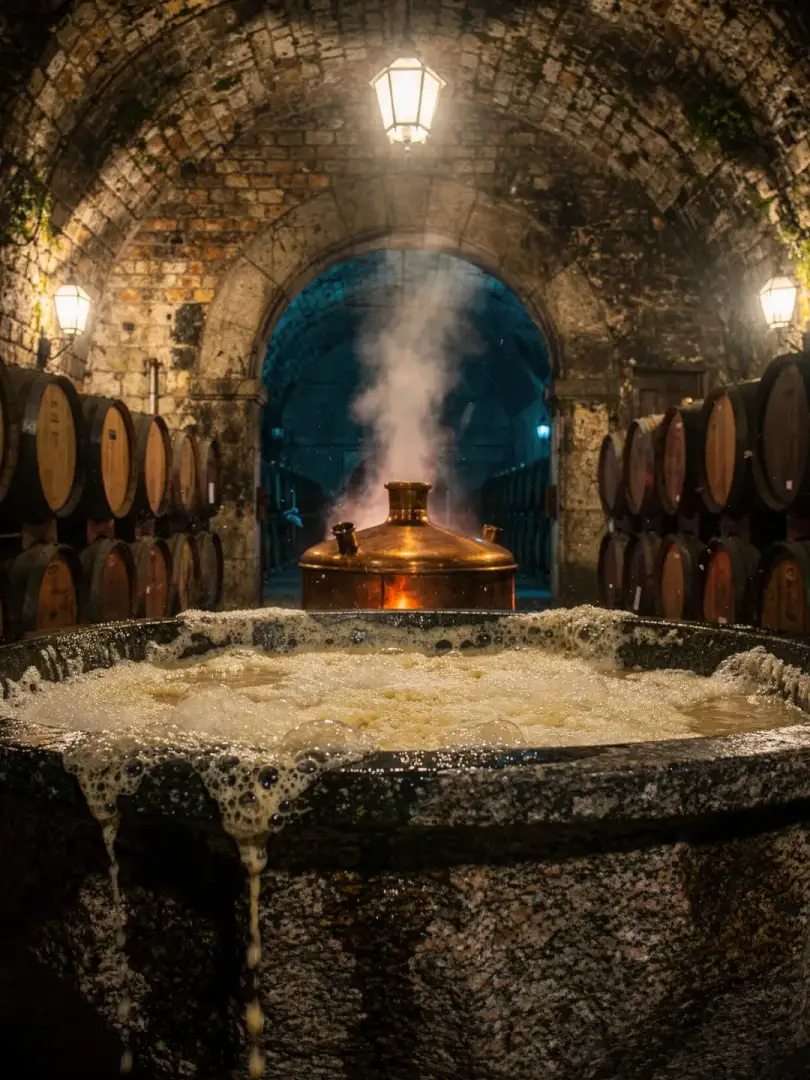
There's a special feature in Hofstetten. According to the brewery, the Granitbock ferments in old granite troughs, inside a brewhouse dating from 1929. The stone is porous and cool, absorbing heat and releasing it slowly, which keeps fermentation steady and even.
Caramelizing with hot stones belongs to an old technique known as stone beer. In the past, glowing stones were thrown into the brewing vessel because wort couldn't be heated directly over fire. Hofstetten has preserved this craft, including for its own stone beers.
With a Zwickl, the yeast stays right in the glass. The name comes from the Zwickelhahn, a small sampling tap on the tank from which brewers draw the unfiltered beer. It's naturally hazy, smells of fresh bread, and tastes a touch fuller, because the yeast and fine proteins remain in the beer.
Time and patience are the most important ingredients in this craft. The Braucommune in Freistadt has used the same brewhouse for this purpose since 1780, and Hofstetten continues brewing in its old building as well. Modern tanks have replaced the old vessels today, but the principle of cold-cellar patience remains unchanged.