Poppy Seeds and Carp
Food & Beer Culture
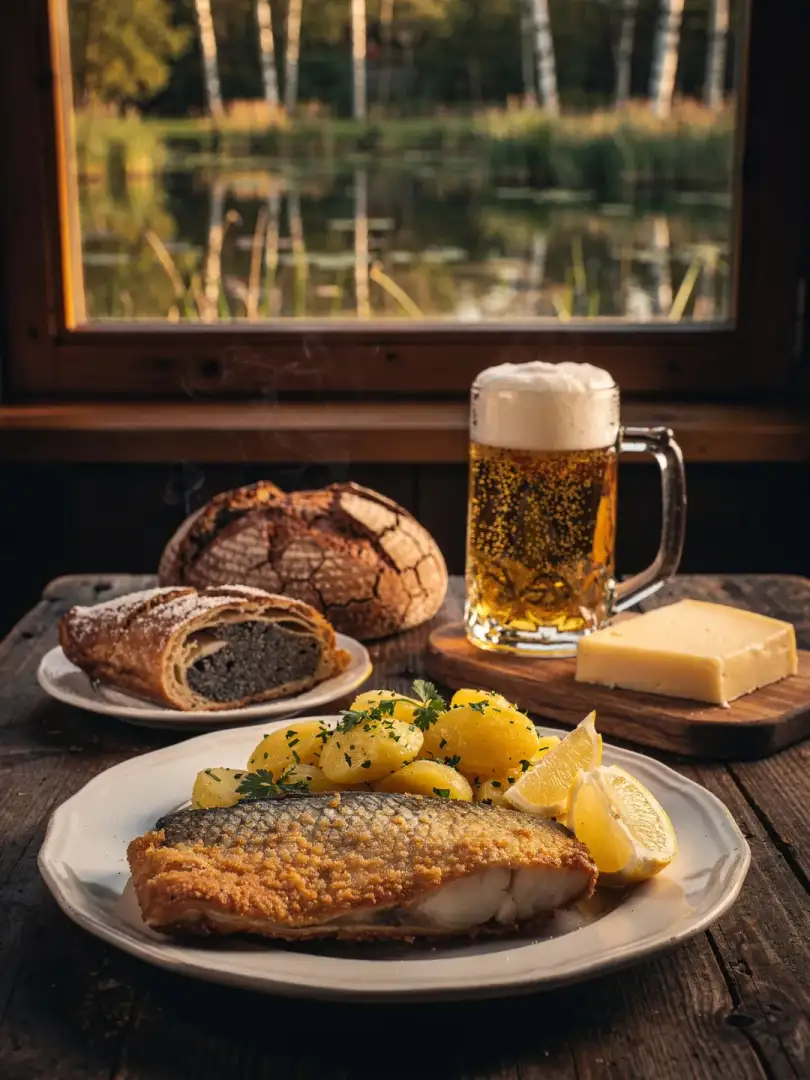
What do people eat with beer in the Waldviertel? First and foremost, Graumohn, gray poppy seed, which has grown here since the Middle Ages. Waldviertler Graumohn holds EU protected status, and until 1934 it was even traded on the London Stock Exchange.
Mohnzelten are the region's best-known pastry. Made from potato dough and filled with ground gray poppy seed, they originated as hearty sustenance for fieldwork and forestry, later becoming a festive treat. Sweet and nutty, they pair well with malt-forward Märzen beers.
Waldviertler Karpfen, carp, comes from the region's ponds. When a menu lists it as “geschröpft,” it means the cook has finely scored the bones so you won't notice them while eating. A dry, slightly bitter beer cuts nicely through the richness.
Hearty, spicy dishes are best left for rye beer. Bread, cheese, and smoked meats enhance the rye spice, while the carbonation keeps things from feeling too heavy.
Beer culture here is tavern culture. In Weitra, a beer trail winds past landmarks of the town's old brewing history, and at Schloss Weitra, the Erlebniswelt Bier exhibition tells the story of brewing. Zwettl also offers a brewery tour with tasting.
Beer is a natural part of celebrations in and around Weitra. At Kirtag village festivals and in local inns, it's served in Krügerl mugs, often alongside roast pork or a Brettljause platter. With food, beer rounds out the meal rather than stealing the show, and a single Seidel is often enough to see you through the course. Try Mohnzelten and carp side by side, and you'll notice just how differently beer handles sweetness and richness.