Top- and Bottom-Fermented
Yeast & Fermentation
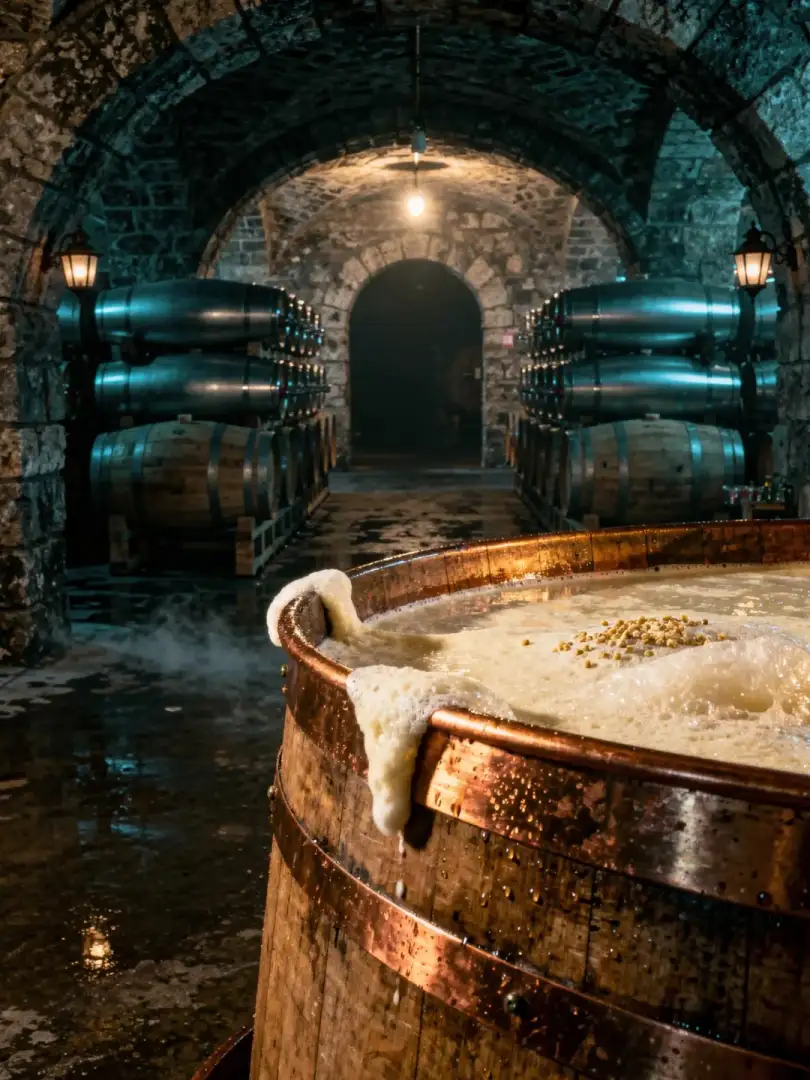
Yeast converts malt sugar into alcohol and carbon dioxide, and there are two main families. Top-fermenting yeast works warm, at around 15 to 22 degrees Celsius, and rises to the top, while bottom-fermenting yeast works cool and sinks to the bottom.
Most of what's poured in the Waldviertel falls into the category of bottom-fermented beers: Märzen, Pilsner, and Zwickl. They ferment cool, then mature for weeks in cold lagering tanks, becoming clear, round, and mild in the process.
A counterpoint is Schremser Roggen Bio Bier. It's top-fermented, which gives it a fruitier, spicier note, and it stays naturally cloudy. The rye intensifies the spice, while the top-fermenting yeast adds the fruit.
Naturally cloudy means the yeast stays in the beer. The beer looks slightly hazy, tastes a bit fuller, and carries more of the yeast's bready character. Zwickl, as such beers are called in Austria, comes straight from the lagering tank and isn't filtered.
Why does lagering take so long? In the cold, the yeast breaks down unwanted byproducts, the carbon dioxide binds, and the beer clarifies on its own. This takes time but no extra technology—and that's precisely the appeal of the craft.
In both Zwettl and Schrems, fermentation remains a quiet process, noticeable only through bubbles in the vat and the scent of bread and fruit. Once the yeast has consumed the sugar, it settles. The young beer is then drawn off and pumped into tanks for lagering.