Cold-Matured
Yeast & Fermentation
How is Vienna Lager brewed? Bottom-fermented, with yeast that works at just a few degrees above freezing and sinks to the bottom after fermentation. This lager yeast is a hybrid of two species and copes with cold far better than ale yeast does.
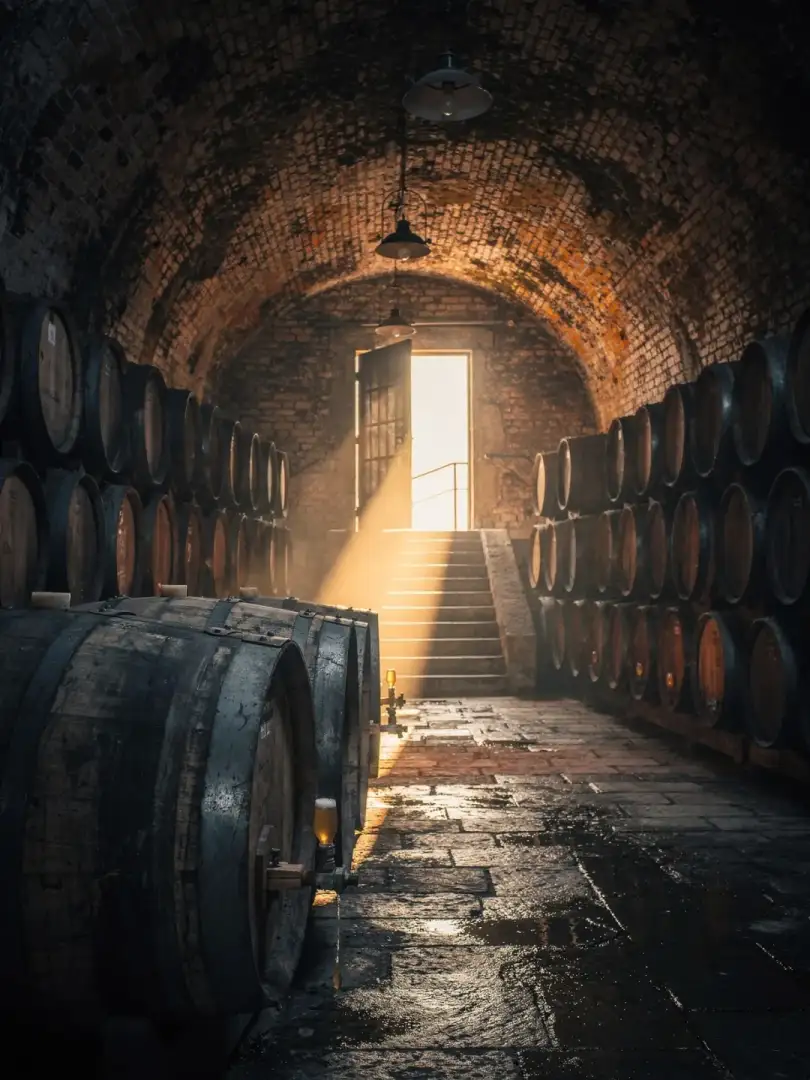
Dreher had no refrigerator, only ice. The ice cellar kept the beer at around freezing point even in summer, and it was precisely this long, cold maturation that came to be called "lagering." During those months in the cellar, the yeast settles out, the beer turns clear, and rough fermentation byproducts break down.
Today, chilled tanks take over this job. Primary fermentation and lagering both run cold, usually over weeks rather than months. Breweries either filter the beer so it stands bright in the glass, or leave it unfiltered.
Unfiltered beer is called Zwickl in Austria. The name comes from the Zwickelhahn, the tap brewers use to draw a sample from the lagering tank. A Zwickl is cloudy because the yeast is still suspended in the beer, and tastes somewhat rounder and fresher than its filtered counterpart.
So the difference between ale and lager lies not in color, but in yeast and temperature. A pale ale is still an ale, and a copper-colored lager remains a lager.
How long the beer is allowed to mature depends on the brewery. Vienna Lager is no strong beer requiring years to mature; it needs weeks to a few months. After that it should taste fresh, free of sulfur or buttery notes, and that's exactly what the cold, quiet maturation in the lagering tank provides.