Tiefquell & Hochquell
Water & Soil
Vienna drinks Alpine water. Since 1873, the First Vienna Spring Water Main has carried spring water from the limestone Alps of Rax and Schneeberg into the city, and Viennese take pride in it. But for a large brewery, this early pipeline wasn't enough back then.
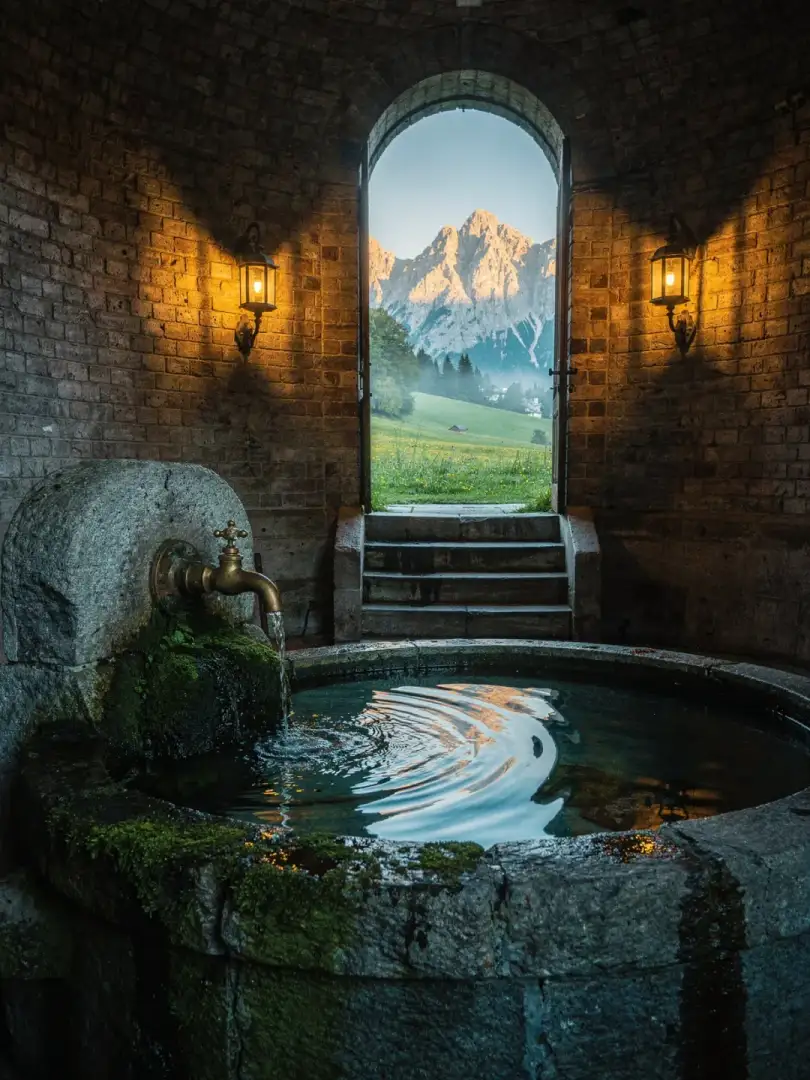
So the Ottakringer brewing masters Ignaz and Jakob Kuffner had their own well dug. The work took seven years, finished in 1898. The Ottakringer Tiefquell reaches 118 meters deep, and the brewery says it still uses no water from the city's spring mains, only water from its own wells.
What does well water do to the beer? Soft water lets hop bitterness come across clean and round, while hard water emphasizes it. There are no reliable ion readings for the historical Viennese brewing water, and the old tables contradict each other. What's certain is only this: today almost all breweries treat their water, so style depends less on the well than it once did.
More important for Vienna Lager was the cold. Dreher harvested his ice in winter and stored it in the cellar so the beer could mature for months at around freezing point. Without that cold cellar, there would have been no lager style, however good the water.
Schwechat sits on the little river of the same name in the flat Vienna Basin, while the city of Vienna lies at the edge of the Vienna Woods and the Danube. Both brewing towns had room for cellar vaults and access to groundwater, which explains why such large breweries could develop here already in the 19th century.