Top- or Bottom-Fermented
Yeast & Fermentation
Opinions differ on what Żywiec Porter is fermented with, and there's a historical reason for that. When the brewery began making Porter in 1881, it was a top-fermented beer in the English style. Top-fermented means the yeast works at warm temperatures and collects on top of the beer, as with Ale.
According to descriptions of today's recipe, Żywiec Porter instead follows the Baltic tradition and is bottom-fermented. Here, lager yeast works at low temperatures and settles at the bottom at the end. The result tastes cleaner and smoother, even though the beer is strong. The Baltic Porter style guidelines allow for both: predominantly bottom-fermented, but sometimes top-fermented too.
That an English style became linked with lager yeast in the east is no exception. Lager yeast is a hybrid of two yeast species that works well in cool cellars, and brewers around the Baltic and in Galicia had long had this technique from Bohemia and Bavaria. This allowed Porter to be brewed colder and for longer than in London.
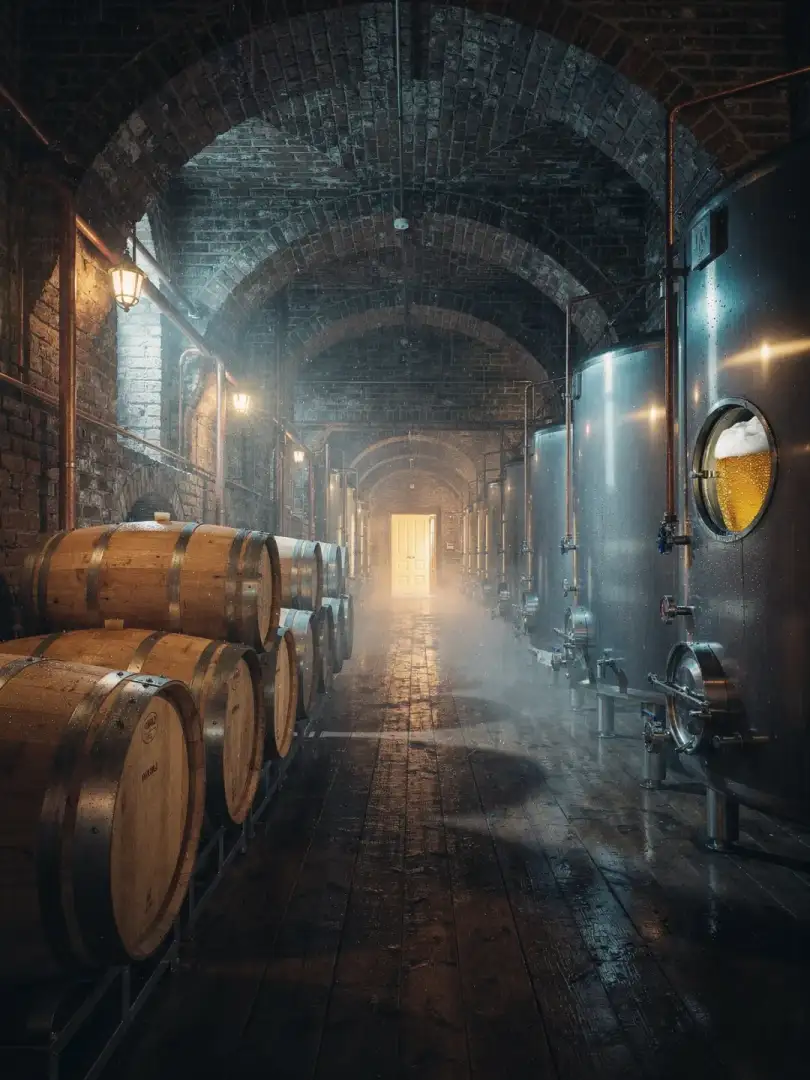
Primary fermentation is followed by lagering. The beer matures in cold tanks until the yeast and haze particles have settled and the rough notes fade. For a strong beer, this takes longer than for a Pils, so that alcohol and roast aroma can come together. The breweries don't state a fixed time in their marketing.
In the 19th century, bottom fermentation became the standard across Central Europe, including at Galicia's major breweries such as Żywiec and Okocim. Small brewhouses in Kraków, such as the one in the old tram depot Stara Zajezdnia in the Kazimierz district, today work with smaller tanks and quite different yeasts.