Hard Well Water
Water & Soil
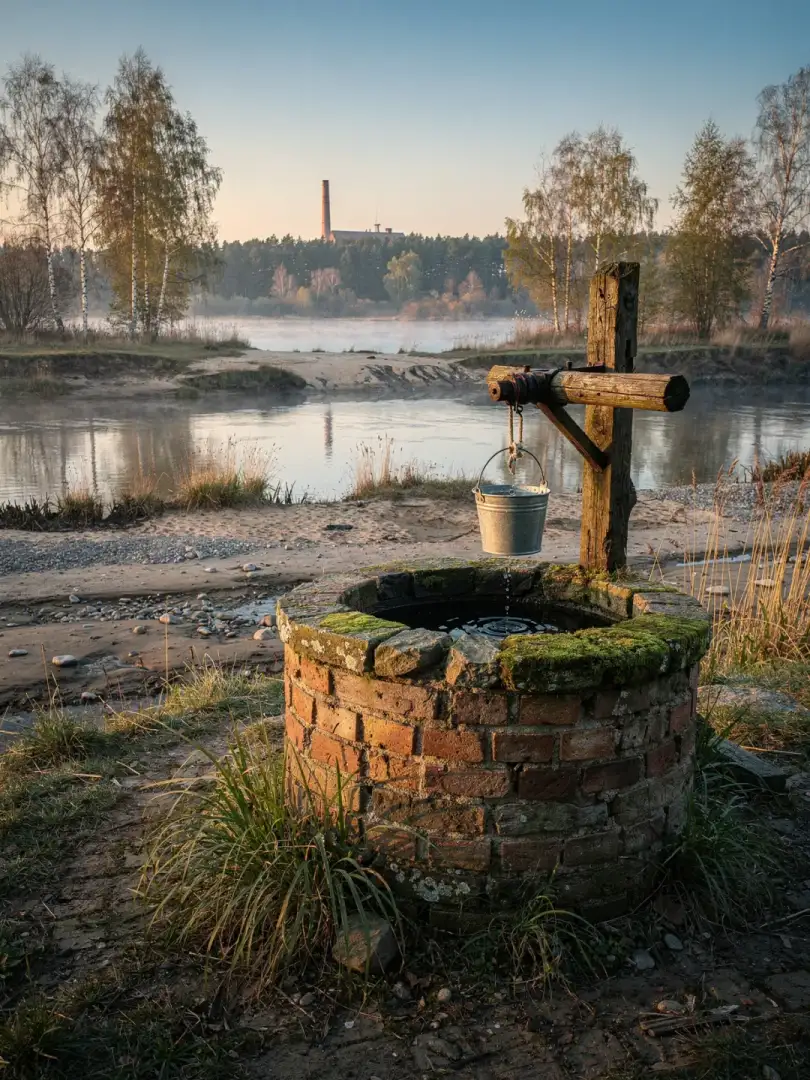
Is the water from Grodzisk half the story behind the style? Polish sources attribute a high mineral content to the beer, and the brewery still claims to brew with Grodziskie water to this day. This means well water drawn from beneath the town.
A well on Poznańska Street was analyzed for the style. It showed a sulfate level of 183 mg per liter and chloride at 81 mg per liter, along with high carbonate hardness. Sulfate, the salt of sulfuric acid, makes hop bitterness taste drier and sharper—the same effect found in beers brewed with gypsum-rich water in England.
Carbonate, or dissolved lime, tends to dull pale beers. In Piwo Grodziskie it meets a low original gravity and a high proportion of wheat malt, keeping the beer lean, while the hard water gives it backbone. This exact combination of minerals and lightness is central to the style's revival in Grodzisk Wielkopolski.
The landscape around Grodzisk is flat. Greater Poland consists of plains, lakes and sandy soils left behind by Ice Age glaciers. The Warta River flows through Poznań. The climate is continental, with cold winters and warm summers, shaping the barley fields and hop gardens as much as the brewing tradition of the town.
There are no rock cellars here. The beer was stored in a dark room at moderate warmth, not in cold tunnels. So the soil of Greater Poland mainly influences the flavor through its water.