Cold-Fermented
Yeast & Fermentation
Is Baltic Porter top- or bottom-fermented? Mostly bottom-fermented, though a few examples are top-fermented. Bottom-fermenting yeast works at cool temperatures and settles at the bottom once fermentation finishes; top-fermenting yeast ferments warmer and collects at the top. Baltic Porter is something of a special case: a beer with the character of a Porter, brewed in the lager tradition.
The reason lies in history. English Porter is an ale, and it arrived on the Baltic coast in barrels during the 19th century. Brewers along the coastal countries created their own, stronger versions, and many of them worked with bottom-fermenting yeast simply because that's what they already knew. The result is smoother and less fruity than an English Porter. In Poland, the style is called Porter Bałtycki, and Browar Amber in Bielkówko is one of the breweries that made it famous.
A beer with this much original gravity is a tough job for the yeast. It has to process a huge amount of sugar while coping with the rising alcohol level. That's why brewers pitch more yeast than they would for a Pils and keep temperatures low, to avoid unwanted fruity notes. When fermenting a beer this strong, every degree counts.
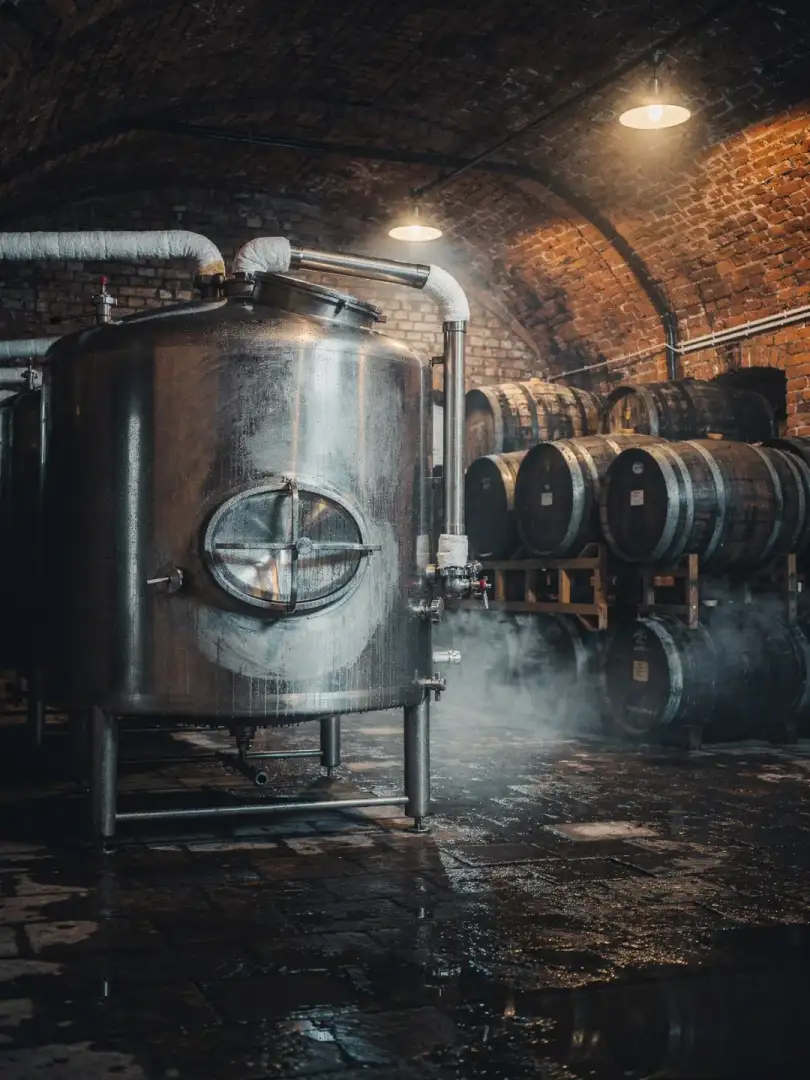
After primary fermentation, the beer spends a long time maturing in cold tanks—often several weeks to months. This process is called lagering. During this time the yeast settles out, the sharp roasted and alcohol notes soften, and the flavor rounds out.
With Jopenbier, things worked differently: its high sugar and alcohol content kept it stable until it was drunk. The modern revivals from Olimp and PG4 follow this model, based on today's descriptions of the historic beer.