Granite and Atlantic
Water & Soil
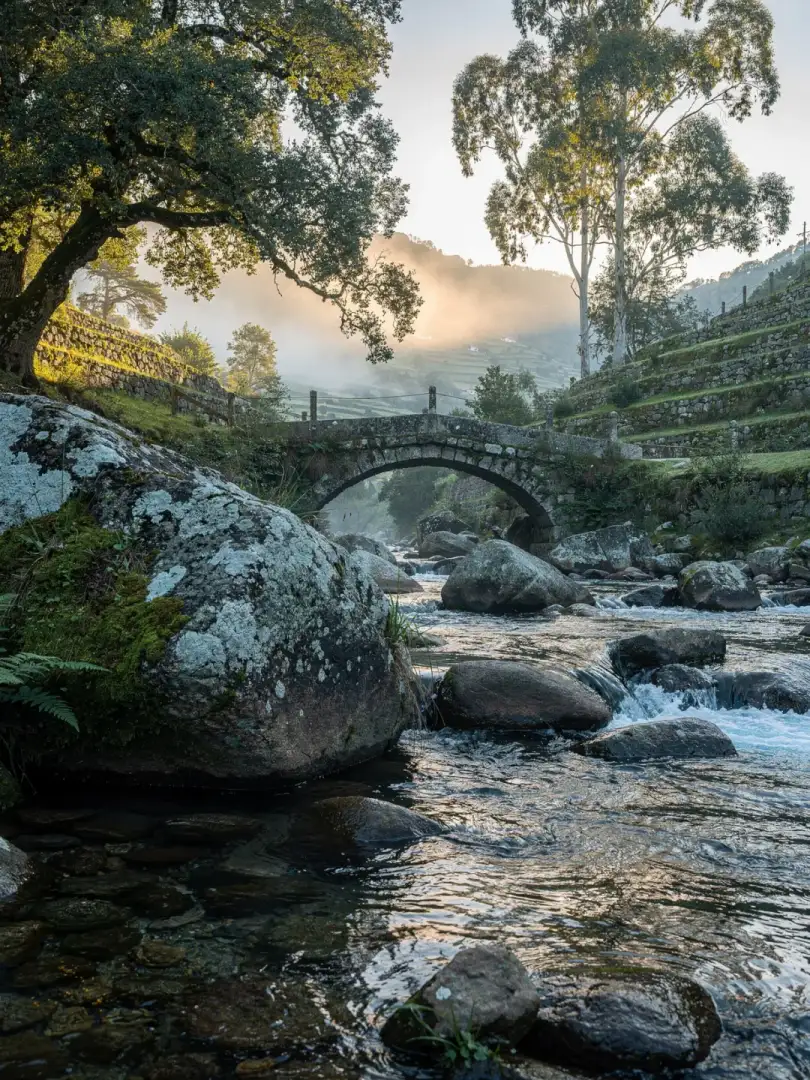
Water flows soft through the granite here. Northern Portugal sits on this rock, and Porto's old town is built from gray granite. Rain seeping through granite picks up almost no lime. Water with little dissolved calcium and magnesium is called soft.
That's a good starting point for pale lagers. Hard, lime-rich water makes hop bitterness feel harsh, while soft water rounds it out and keeps it subtle. For the same reason, the very soft water of Pilsen is considered part of the recipe for Bohemian pilsner.
The Douro flows into the Atlantic at Porto. It originates in Spain and, further upstream, runs through schist terrain, where Port wine grows on steep terraces. At the coast, though, granite dominates, and that shapes how soft or hard the city's tap water turns out.
The climate here is Atlantic, with mild winters and plenty of rain. Fog often rolls in from the sea along the coast in summer, while inland temperatures climb much higher. Lager, though, wants to mature cool, and in modern breweries that's handled by technology, not the weather.
In Vila Nova de Gaia stand the lodges of the Port wine houses, where barrels rest in cool sea air. A lager needs no such cellars: it matures in chilled stainless steel tanks at near-freezing temperatures, with water drawn from the mains or from the brewery's own wells.
For beer lovers, this means the terroir explains less about the taste of individual brands than it does about the character of the whole north. Where granite, rain, and sea air come together, the result is mild, clean beers suited to rich food and warm evenings. The bold flavors here are left to the wine.