Sierra and High Plateau
Water & Soil
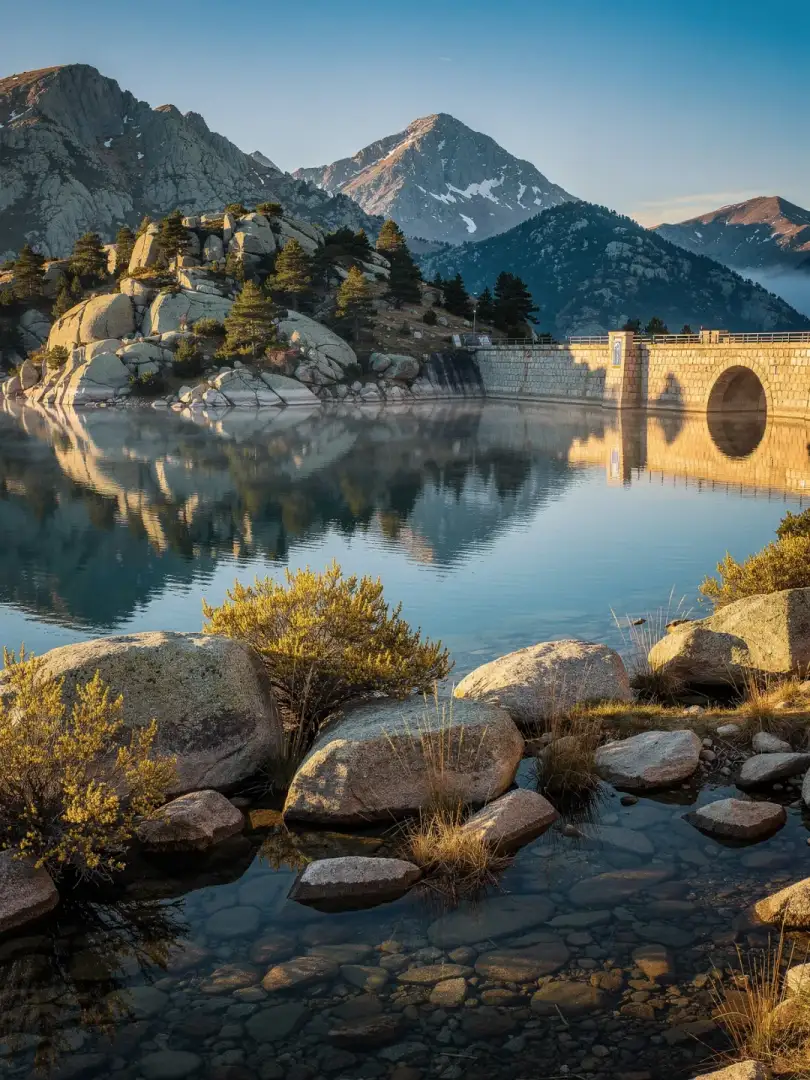
Where does the water for Madrid's beer come from? The city sits at around 650 meters above sea level on the Castilian plateau, and most of its drinking water comes from reservoirs in the Sierra de Guadarrama, the mountain range that rises to the north of the city. The water supplier is Canal de Isabel II, which has managed the city's water supply since 1851.
Water from the granite mountains is considered soft. It contains few dissolved minerals, which suits a pale lager well, since hard carbonates would make the hop bitterness taste sharper on the palate. Just how soft the water ends up at each individual brewery depends on how it's treated.
There's not much to say about the city's soil in relation to beer, since Madrid's beer doesn't grow out of the landscape. The ingredients come from far afield, and the breweries work with water they treat as needed. Mahou today brews, among other places, in Alovera in the province of Guadalajara, northeast of the capital.
The climate matters more. Madrid has very hot summers and cold, clear winters, since the high plateau lies far from the sea. In July, the thermometer often reads above 30 degrees Celsius in the afternoon, and that's exactly what the caña is made for: a small glass that stays cold for as long as it's being drunk, and is then replaced by a freshly poured one.
So there's a solid reason why the city likes to pair its lager with ice and cold. A beer that turns lukewarm in the midday heat tastes flat, no matter how well it's brewed.