Pap, Braai, Kota
Food & Beer Culture
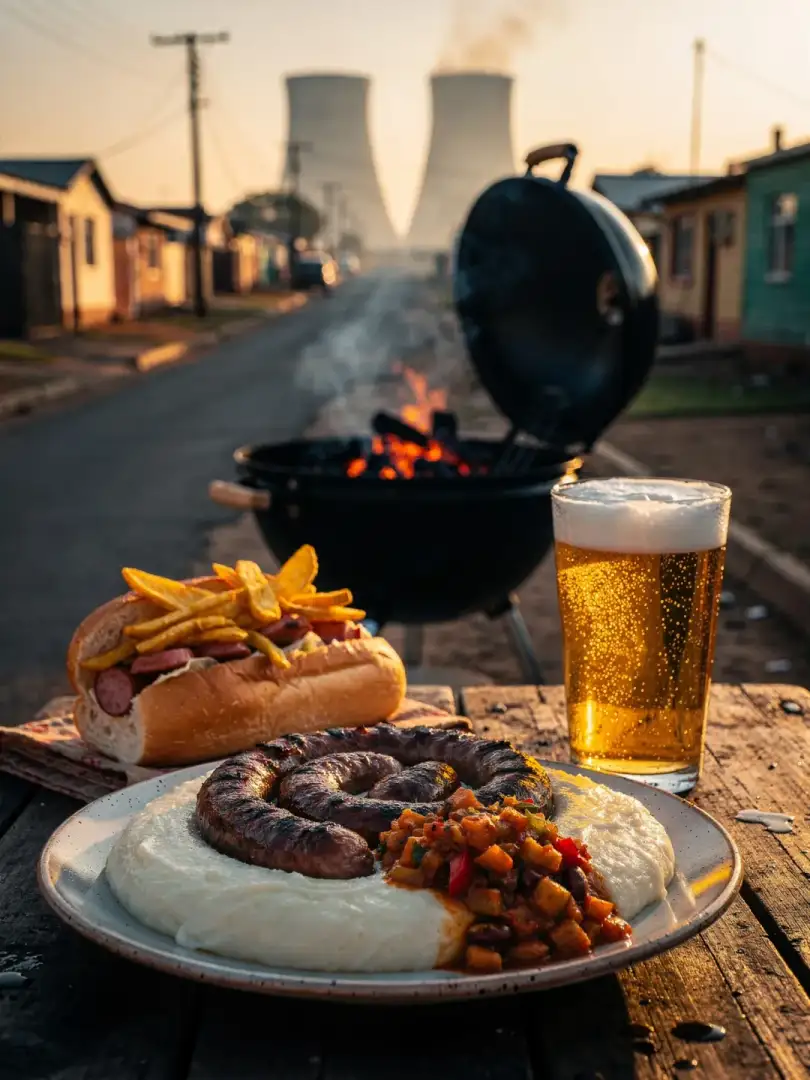
What do people in Johannesburg eat with their beer? Most often, meat off the fire. At a braai, South African-style grilling, boerewors, lamb, and chicken sizzle on the grate, served alongside pap, a firm maize porridge, and chakalaka, a spicy vegetable relish made with tomatoes, carrots, and beans. The smoky char from the fire and the tang of the relish pair well with a lager.
In Soweto, the kota is a street-food classic: a hollowed-out quarter loaf of bread stuffed with fries, sausage, egg, and sauce. Eating one doesn't call for a heavy beer, a cold lager does the job. Umqombothi, on the other hand, often accompanies pap and meat, since its acidity cuts through the fat and it's filling in its own right.
The shebeen was always more than just a bar. It served as living room, stage, and news exchange, and many early shebeens were run by women supporting their families through the trade. Photographer Ernest Cole documented shebeens and Bantu beers in his work. Today, many such establishments are called taverns and remain a fixture of neighborhood life.
Umqombothi also has a ritual dimension. It's poured at family celebrations, weddings, and ceremonies honoring the ancestors, and brewing it carries a role of responsibility within the community. A respectful guest asks how it's meant to be shared and drinks along with everyone else.
September 24th marks Heritage Day. Many families turn it into a braai day, and beer naturally plays its part. Anyone drinking in Johannesburg would do well to engage with the history of the beer halls, and with a sense of responsibility.
Drinking culture here thus sits at the intersection of celebration, daily life, and memory. All the more reason, when tasting, to also ask who brewed the beer, and for whom.