Highveld Without a River
Water & Soil
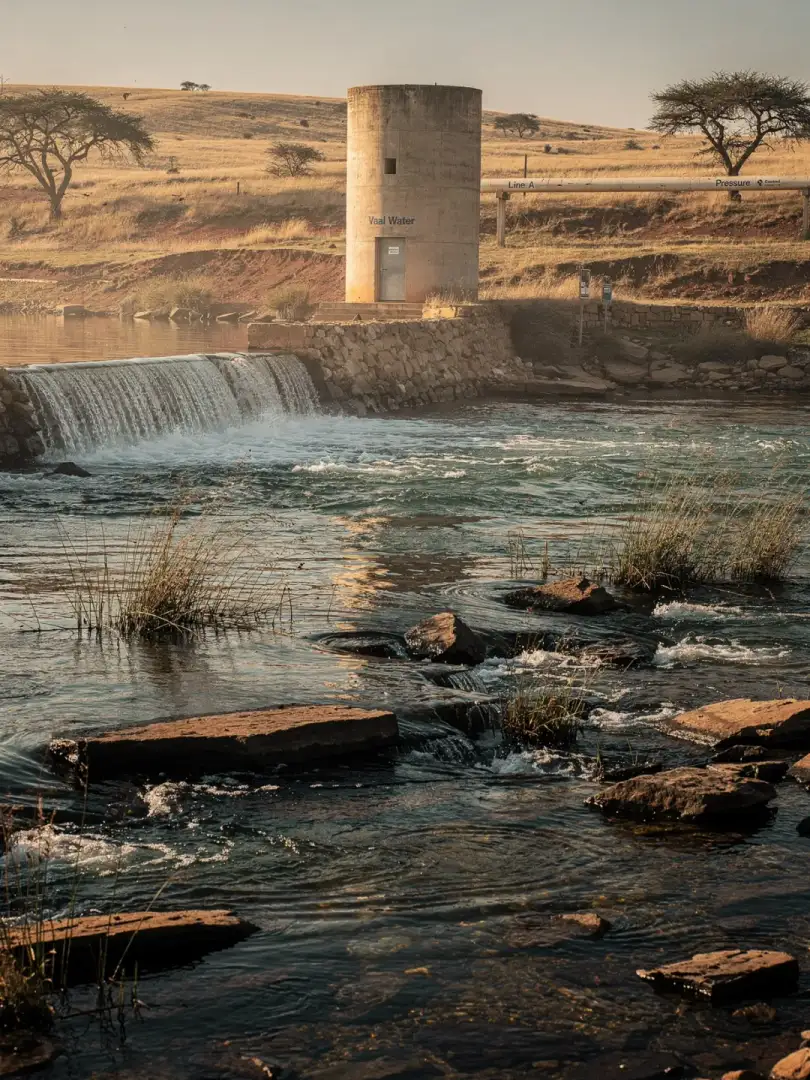
Where does the water for beer in Johannesburg come from? Not from the city itself. Johannesburg sits at an elevation of around 1,750 meters on the Highveld, straddling a watershed, with no major river at its doorstep. The drinking water supply comes from Rand Water, which draws it predominantly from the Vaal system. The city, in other words, lives on water that travels a long way to get there.
A significant portion of it comes from Lesotho. The Lesotho Highlands Water Project channels water from the mountains of the neighboring country through tunnels into the Vaal catchment area. For breweries, this means they work with tap water from a vast interconnected network, not from a single source that might lend its name to a beer.
Mineral content figures, the kind associated with Pilsen or Burton, carry no particular cachet here. Nearly all breweries treat their water regardless, softening it or adding salts, and large operations like the SAB brewery in Alrode near Alberton do so on an industrial scale. The style is shaped in the brewhouse, not in the ground.
Elevation, however, has a measurable effect. At 1,750 meters, air pressure drops, so water boils at around 95 degrees Celsius instead of 100. Brewers have to adjust boil times and evaporation rates accordingly, and carbonation behaves a bit differently during packaging than it would at sea level.
A brewery cellar carved into a mountain, as you'd find in Franconia, has no equivalent in Gauteng. Storage happens in tanks and warehouses, and the cold chain keeps the beer cool. The climate only helps so much: summers bring afternoon thunderstorms, winter nights are dry and cool, and the days are mostly sunny and mild.
Water plays only an indirect role in Umqombothi as well. It's prepared at home with whatever comes out of the tap, and its quality shapes the result far less than malt, warmth, and time do.