Cold and Fresh
Tasting
In the glass, Castle Lager glows straw yellow to gold, topped with a white head that holds for a few minutes. The aroma recalls grain and freshly baked bread, with a faint sweetness lingering beneath. The sip is lean, the carbonation lively, and the bitterness stays subdued.
How cold should it be? In South Africa, pale lager is drunk ice-cold, around 3–5°C (37–41°F). That suits the Cape's hot days and tames the maize's sweetness. As the beer warms, the malt and maize come forward more. For a closer look at the flavor, let it sit a while and sip slowly—you'll notice the aroma building with every degree of warmth.
A craft IPA like Devil's Peak's Kings Blockhouse wants it a touch warmer, around 8–10°C (46–50°F), or the aromas stay locked in. The brewery runs a taproom in Woodstock where you can sample several beers side by side.
Milk Stout tastes of cocoa, coffee, and a hint of caramel. It's best served at cellar temperature, roughly 10–12°C (50–54°F), and pairs beautifully with chocolate. For comparison, try it alongside Castle Lager: two beers, one country, utterly different worlds.
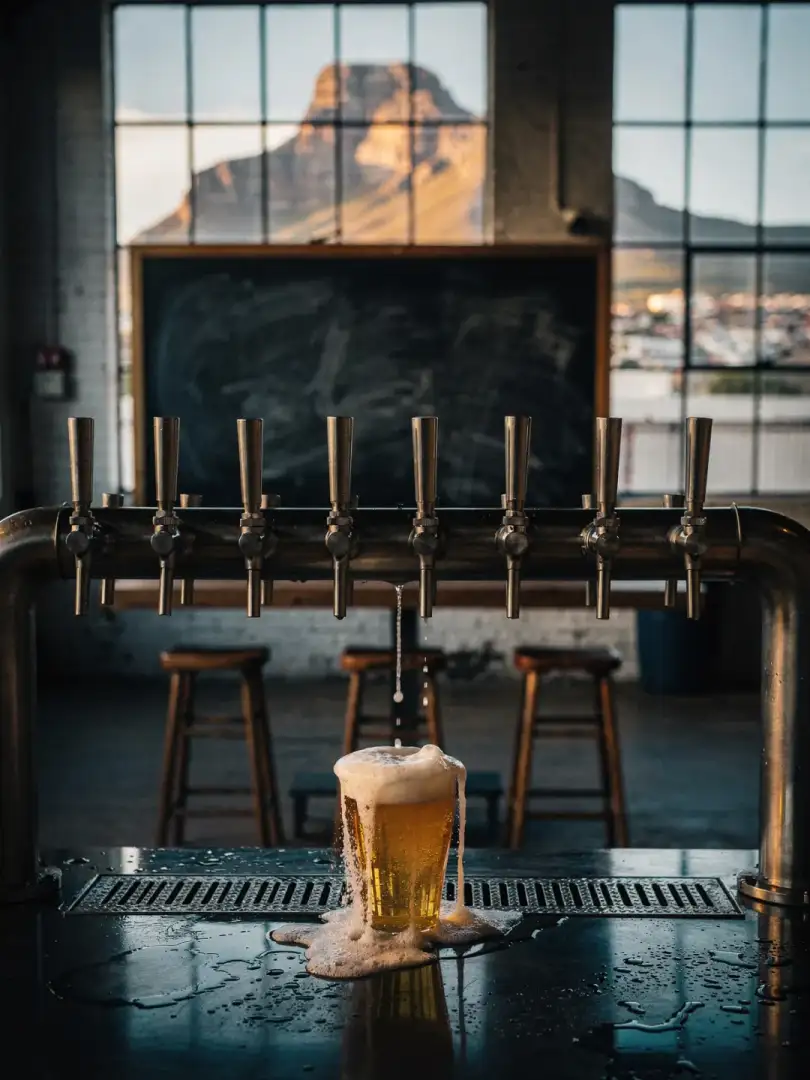
In Cape Town, beer is usually poured from bottle to glass, or drunk straight from the bottle. When pouring draft, tilt the glass and straighten it out toward the end, building a small head of foam. Bottle caps come off with the classic opener. A clean glass, rinsed beforehand with cold water, helps the foam hold.