Aging, Not Rushing
Yeast & Fermentation
What does Ležák mean? The Czech word comes from ležet, to lie: a ležák is a beer that lies, meaning it matures in the cellar. This is the name for lager beers, and it's also the name of the PGI beer from Březnice. Fermentation and maturation take longer than with a top-fermented beer, which can be ready to drink after just a few days.
Bottom-fermenting yeast works cold, usually around 8 to 12 degrees Celsius, and sinks to the bottom of the vessel at the end of fermentation. The young beer then moves into a lagering tank, where it stays for weeks. There it clarifies, and fine secondary aromas disappear that would otherwise make it taste unpleasant.
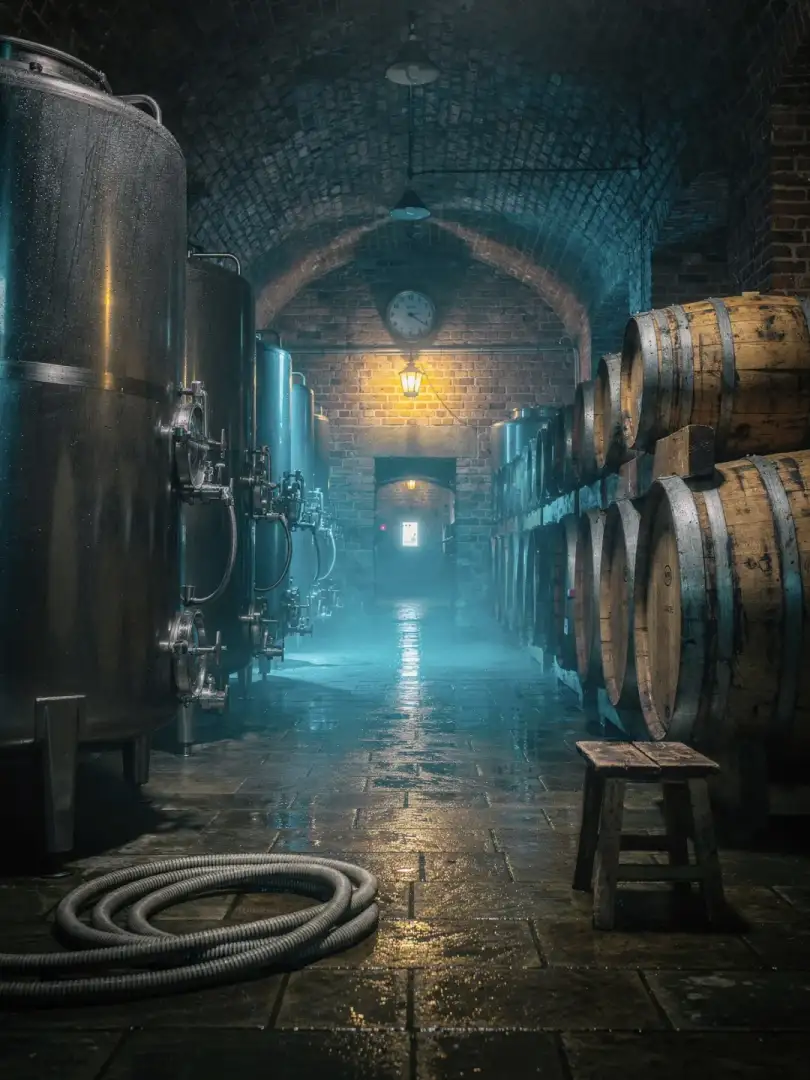
In Central Bohemia, large stainless-steel tanks handle this part of the process. At Kozel in Velké Popovice, Krušovice, and the smaller houses, this is the standard. In Kutná Hora, fermentation returned to the historic rooms with the Měšťanský pivovar after the old brewery closed—just using modern equipment.
How does a beer with yeast end up in the bottle? Czech brewers distinguish between filtered and unfiltered. A Kvasnicové pivo or Kvasnicák is a yeast beer that stays cloudy. Whether Kozel, Krušovice, or Herold offer variants of this is up to each house to decide.
It's worth noting that yeast has only been known as a living organism since the 19th century. Before that, brewmasters brewed using the sediment from the previous batch, without knowing what was actually at work inside it. This is echoed in the Baroque cellars, where everything that stayed cool was once stored, without anyone quite knowing why.