Cold-Matured
Yeast & Fermentation
Is porter top-fermented or bottom-fermented? English porter is top-fermented, while Pardubický porter is bottom-fermented. In bottom fermentation, the yeast works cold and sinks to the bottom at the end; in top fermentation, it ferments warmer and rises to the surface.
The result is a dark beer with a clean profile. It tastes less fruity than an English porter, more malt-forward, and the bitterness stays smooth. Unlike its northern relatives, this beer is a lager, meaning it's cold-conditioned.
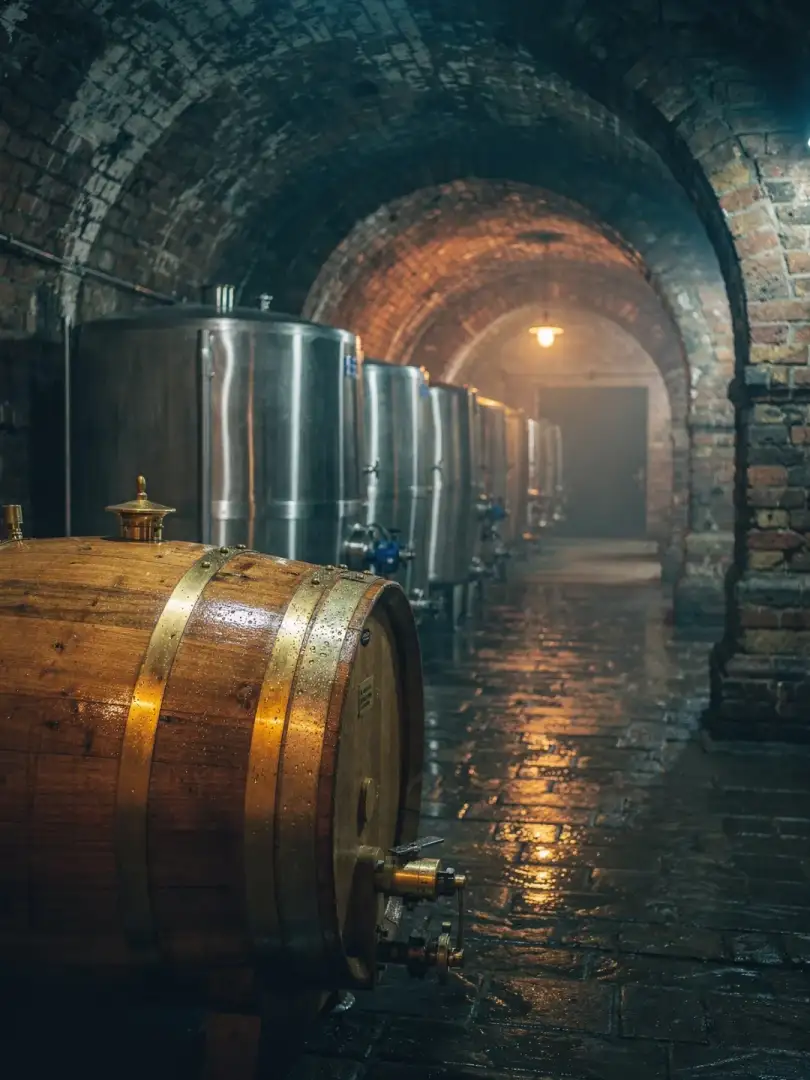
The conditioning takes time. According to the brewery, Pardubický porter matures about three times as long as an ordinary lager—around three months. During this period, the beer clears, and the malt flavors meld into a rounded whole.
Primátor's wheat beer, on the other hand, is top-fermented. Wheat beer yeast produces aroma compounds during fermentation that smell of banana and clove. It often remains in the beer, giving it a slightly hazy appearance.
Bernard emphasizes that it brews unfiltered and unpasteurized beers. Pasteurizing means briefly heating the beer to kill off microbes and extend its shelf life. Skipping this step yields a fresher beer, but one that needs to stay cool.
Temperature shapes the flavor. Cold fermentation produces fewer fruit esters—aroma compounds reminiscent of pear or apple—so a bottom-fermented beer tastes cleaner. But it takes longer, often weeks instead of days, which explains the effort and extended lagering time in Pardubice. Warmth, by contrast, speeds up the yeast and makes the beer fruitier.