Cold & Slow
Yeast & Fermentation
What does bottom-fermented mean? The yeast works cool, usually below ten degrees Celsius, and sinks to the bottom of the fermentation tank once fermentation ends. The result is a clean, clear beer without fruity side notes. Apart from a few craft-scene exceptions, nearly everything in South Moravia is fermented this way.
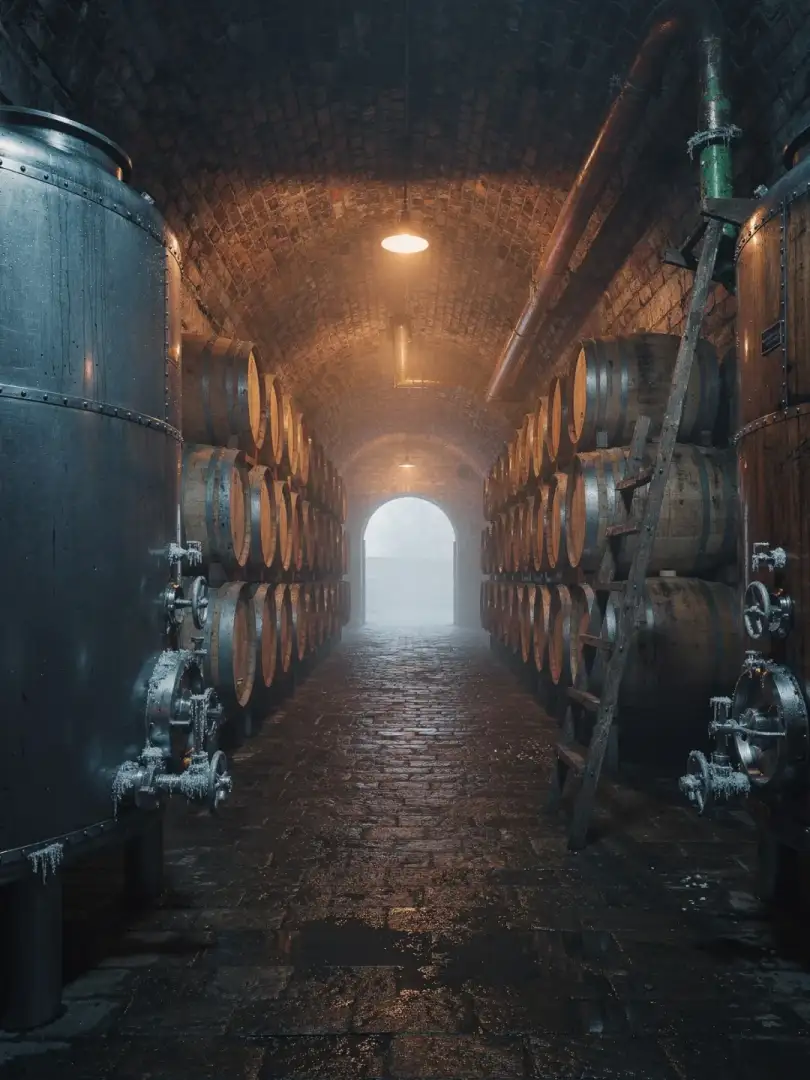
After primary fermentation comes lagering, in Czech ležení. The word comes from “to lie,” and the Ležák, or lager beer, takes its name from this. For weeks the young beer rests in a cold tank or cellar, during which yeast and sediment settle out and the flavor rounds off.
Brewers in Brno and Znojmo work with original gravities expressed in Czech as “degrees.” A Twelve, known as Dvanáctka, has twelve degrees Plato of original gravity—that is, the amount of dissolved sugar from the malt before fermentation. The number says nothing about alcohol content, which for a Twelve typically lands around five percent.
Starobrno also bottles unfiltered yeast beers, in which the yeast stays in the glass. Smaller brewers experiment with yeasts for top-fermented beers, with lactic cultures and mixed fermentations, yet the heart of the region remains the cold-fermented lager.
Yeast loves calm, and it gets exactly that in the tanks of Brno and the cellars of Znojmo. Fermentation at cool temperatures takes longer than for an ale, and the brewer waits until the beer has cleared. Those in a hurry cut this time short; the brewers of Brno and Znojmo, true to tradition, do not. You can taste it later in the clarity of flavor.