Cool and Slow
Yeast & Fermentation
Beer from the Saaz region is bottom-fermented. Bottom-fermented means the yeast works at cold temperatures, usually between about 8 and 12°C (46–54°F), and settles at the bottom of the tank after fermentation. The result is a clean, clear beer with no fruity fermentation notes, letting malt and hops speak for themselves.
Lager yeast, Saccharomyces pastorianus, is a hybrid of two species. One is brewer's yeast, the same one used for top-fermented ales. The other, Saccharomyces eubayanus, was only described in 2011, found in Patagonia. The word "lager" comes from the German for "storage," since the young beer rests for weeks in the cold after primary fermentation.
In a Czech brewery, fermentation is usually preceded by a particular mashing method: part of the mash is boiled and then returned to the kettle. This technique is called decoction. It gives the beer a rounded malt character and is traditionally widespread for lagers in the Czech Republic.
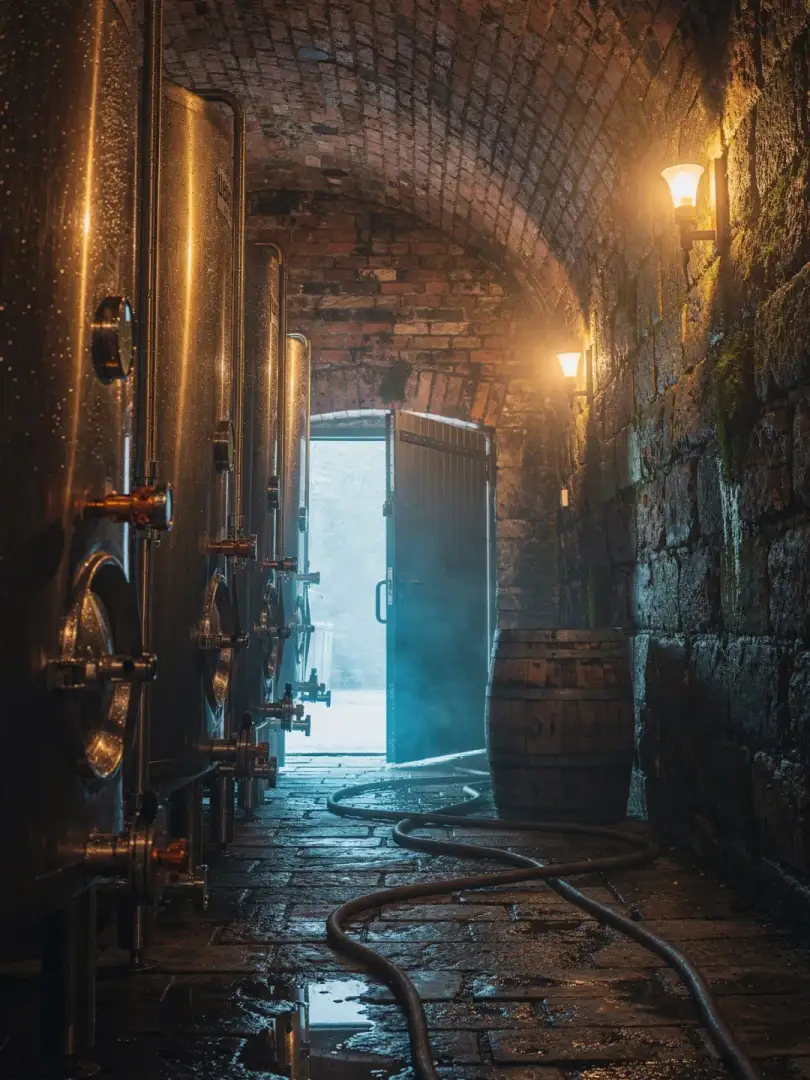
After that come primary fermentation, conditioning, and lagering. In the past this took place in cool cellars; today it happens mostly in electrically cooled stainless steel tanks. The length of lagering helps determine how round and clear the finished beer tastes. Beers lagered for a shorter time taste fresher; those lagered longer come across smoother.
Žatec's contribution to the fermentation process is the hops: their resins help keep the beer stable and shelf-stable, while their oils give it its aroma. The yeast itself, in Czech breweries, serves mainly as a tool for cleanliness and consistency.