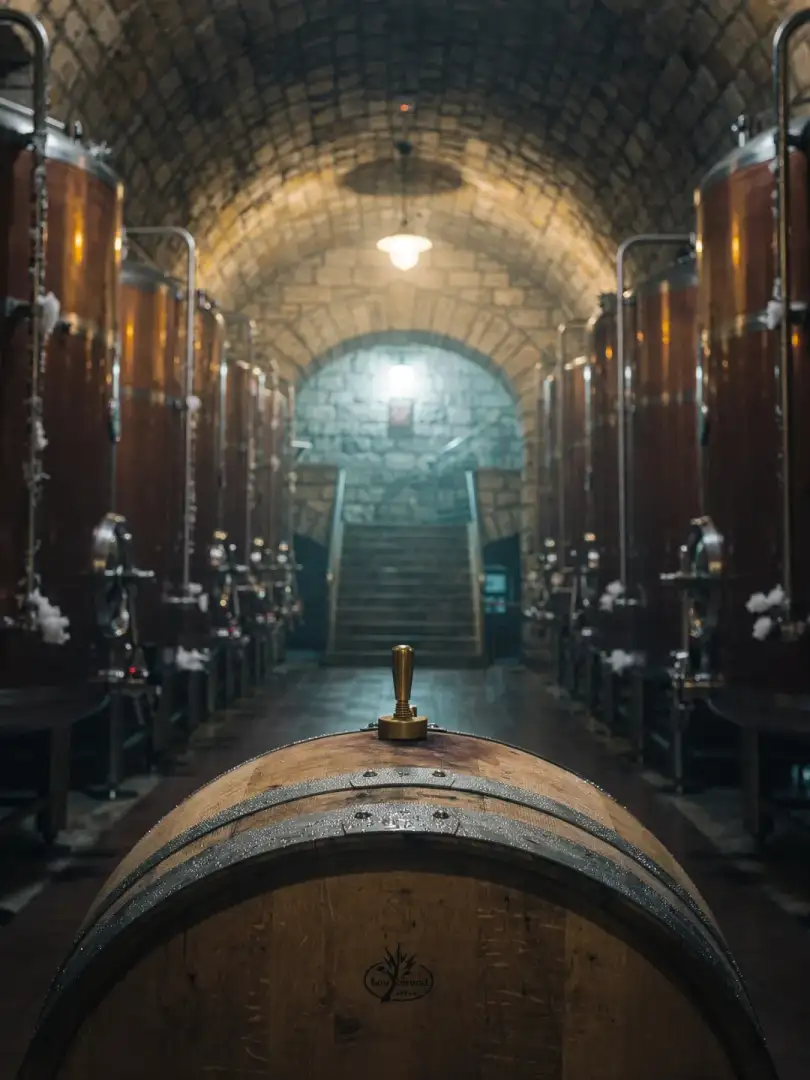
Cold in the Rock
Yeast & Fermentation
Bottom-fermenting means the yeast works at cool temperatures and settles at the bottom of the tank once fermentation is done. The beer from Kőbánya belongs to this family, and without the cold tunnels, it would hardly have come into being.
The yeast itself is a hybrid of two yeast species, Saccharomyces cerevisiae and Saccharomyces eubayanus, and goes by the name Saccharomyces pastorianus. In 1883, Emil Christian Hansen isolated the first pure culture of bottom-fermenting yeast at the Carlsberg laboratory in Copenhagen. Before that, brewers worked with mixed cultures that sorted themselves out naturally when kept progressively colder.
It was exactly this knowledge that Viennese brewer Anton Dreher brought to the Kőbánya cellars. The beer ferments vigorously only at low temperatures, followed by a lagering period during which it rests in the cold for weeks. During this time it clarifies, the flavors round out, and some of the carbonation stays locked into the beer.
In the tunnels, this happened without any technology at all. The constant coolness of the rock did what refrigeration machines would later take over. Today, fermentation happens in modern temperature-controlled tanks, but the idea of long, cold maturation has remained and is considered a hallmark of quality in any lager.
How long a beer is lagered is up to each individual brewery. The simpler the recipe, the less room there is for error, which is why a plain, pale lager remains one of the most demanding challenges for brewers. Even small deviations in temperature, yeast quantity, or lagering time are noticeable in a beer that has no bold flavor to hide behind.