Colorado River Water, Treated
Water & Soil
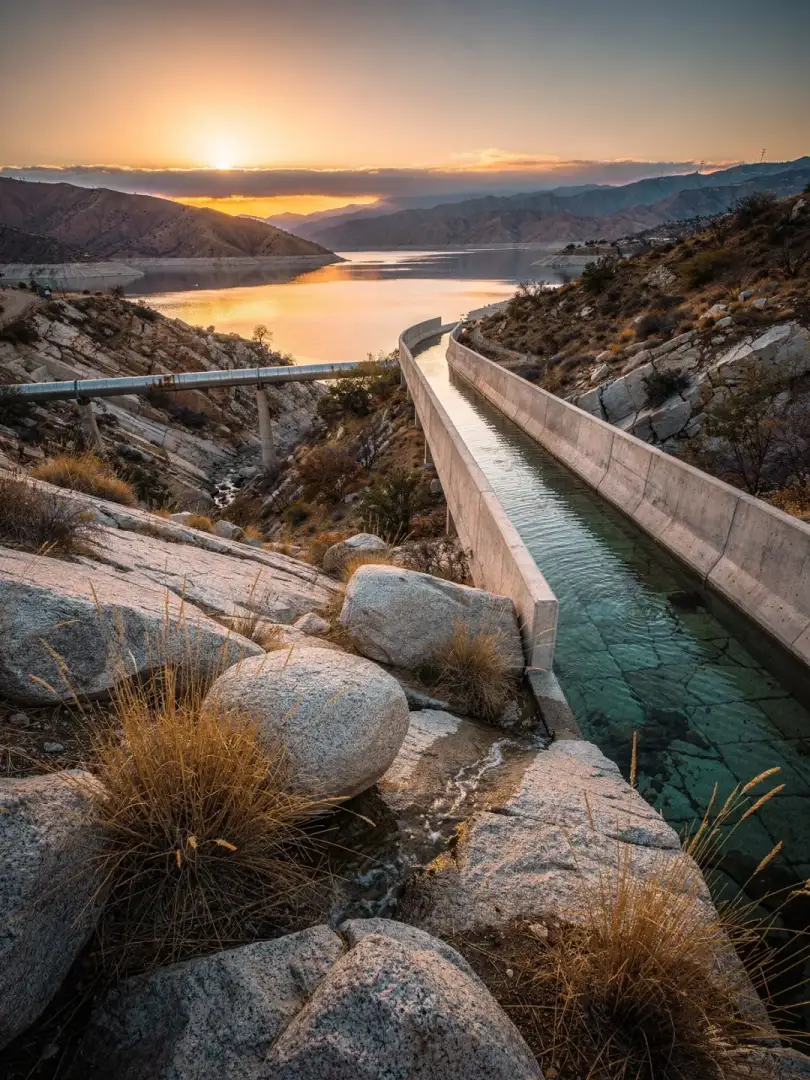
Most of the water used in a San Diego beer travels a long way to get there. Around 2020, roughly two-thirds of the region's supply came from the Colorado River, about 20 percent from local sources, and the rest from Northern California. Aqueducts carry it over the mountains to the coast.
For brewers, this is a starting point, not a fixed fate. They filter the water and rebuild its mineral profile from scratch. Sulfate, often derived from gypsum, sharpens an IPA's bitterness and dries out the finish. That very hardness of flavor is exactly what brewers are after in a West Coast IPA.
Recycled water is the new development. Pure Water San Diego purifies wastewater to drinking-water standards. AleSmith used it to brew a lager called Re:Beer. This isn't a marketing gimmick but a response to years of drought in a region that gets very little rain. It makes the city less dependent on distant rivers, and it shows brewers just how much flavor lies in the water itself.
Where the breweries are located has less to do with the soil than with real estate zoned for industry. Between inland Escondido and the coastal towns lie warehouse units with room for tanks. The climate is mild and almost frost-free. There are no rock cellars like in Franconia; cooling here is all mechanical.
Cool storage matters, because a heavily hopped beer ages fast. Hop aromas fade within a few weeks if the beer is stored warm. That's why many breweries package in small batches and sell directly out of their taprooms.