Lager Yeast, Fermented Warm
Yeast & Fermentation
How is Steam Beer brewed? With lager yeast, but like an ale. Normally, lager yeast works at 8 to 12 degrees Celsius and needs weeks. Brewers during the Gold Rush had neither ice nor cellars, so they let the same yeast ferment at 16 to 24 degrees.
The result is a beer that bottom-ferments yet tastes fruity and round. Warm fermentation brings secondary aromas unknown to a cold lager: a subtle ester note, some fruit, fullness. Yet the beer remains clear and clean, because the yeast itself is a lager yeast.
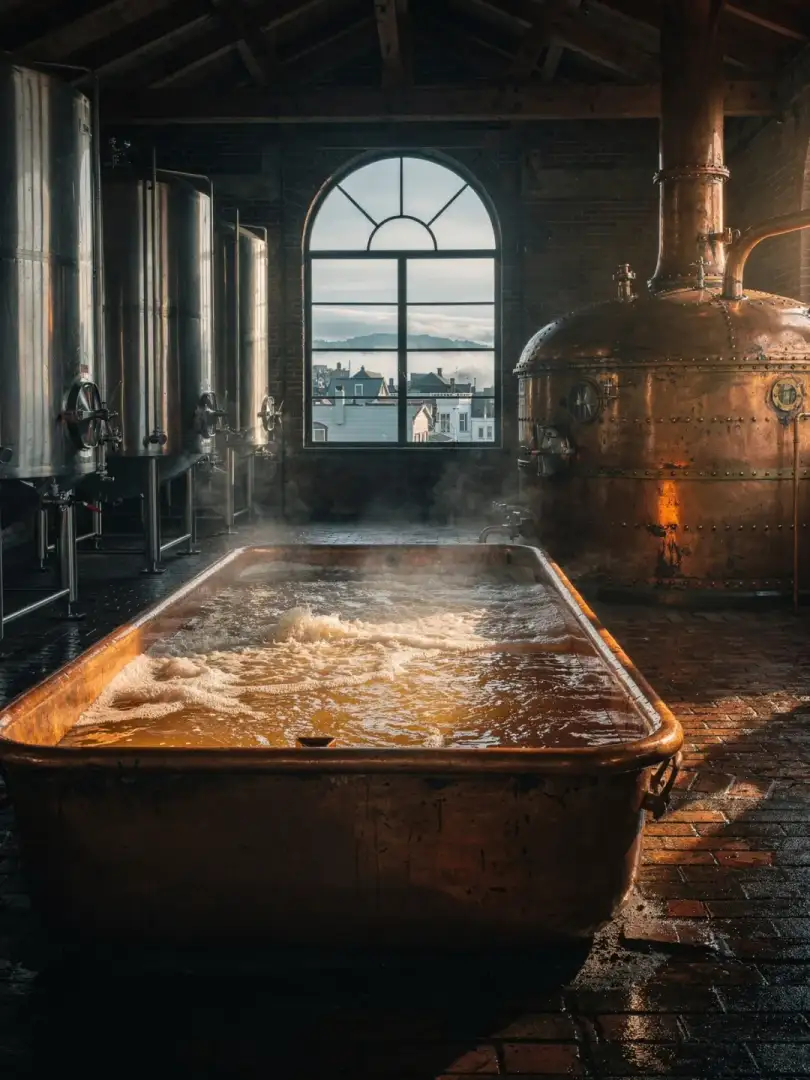
Shallow pans were also used, only about 60 centimeters deep, according to descriptions of the style. In them, the wort released heat quickly. Because the surface area was large, the yeast could take in plenty of oxygen and got going fast. Cooling came from the bay's cool air.
The beer was under pressure and heavily carbonated. When the publican tapped the cask, the carbonation escaped with a hiss. This is considered one explanation for the name, alongside the steam rising above the rooftops.
Anchor Brewing kept the process alive to the very end, most recently on Mariposa Street on Potrero Hill. The yeast remained a proprietary house strain throughout. Since the closure in July 2023, it remains unclear whether and in what form fermentation will resume there.
Modern Bay Area breweries work somewhat differently today. Cooling ships and open pans are rare now, and many use stainless steel tanks with temperature control. But the idea lives on: a lager yeast that works warm, and a beer that manages to be both lean and fruity at once.