Cascades on Tap
Water & Soil
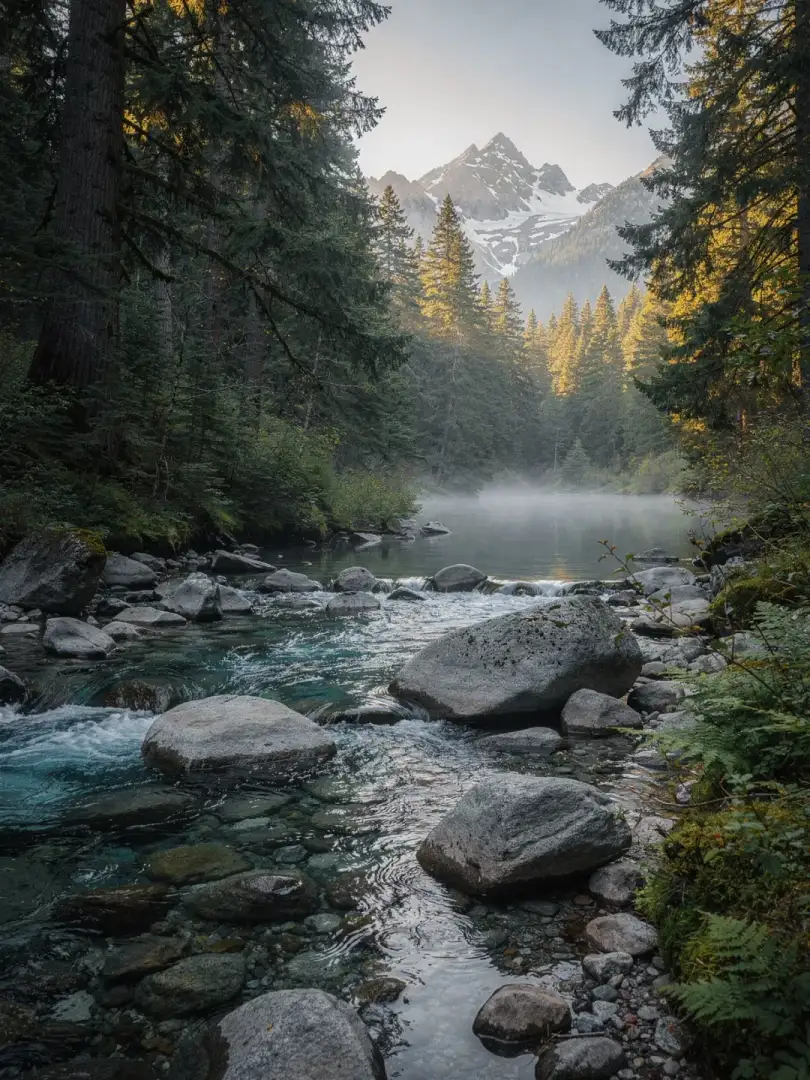
How hard is the water in Seattle? Very soft, and that's the brewers' biggest advantage here. The drinking water comes from two river valleys in the Cascades, the Cedar River and the South Fork of the Tolt River. The larger share comes from the Cedar River.
Its watershed belongs to the city itself and covers more than 90,000 acres, over 36,000 hectares. No settlement or farming is permitted there. That makes Seattle one of the few major water systems in the US that doesn't need to filter its water.
The city utility's figures are clear. Total hardness sits at roughly 1.55 to 1.73 grains per gallon, with calcium hardness at 24 to 26 milligrams of calcium carbonate per liter. By comparison, the water in Munich, Dublin, and London is carbonate-rich, which favors dark malts.
Soft water is like a blank sheet of paper. It carries almost no flavor of its own and lets hops and malt shine through clearly, which suits pale, clean beers well. Brewers wanting a bold, dry bitterness add mineral salts, such as gypsum, whose sulfate sharpens the hop bitterness. Many brewers in Georgetown, Ballard, and Fremont adjust their water fresh for every beer.
The landscape delivers the weather to match. Between the Olympic Mountains to the west and the Cascades to the east lie Puget Sound and Lake Washington, and winters are wet and mild. There are no naturally cool rock cellars here. Beer is aged in chilled tanks, and breweries prefer to set up in the city's old workshops and warehouses rather than caves.