Caves, Ice, River
Water & Soil
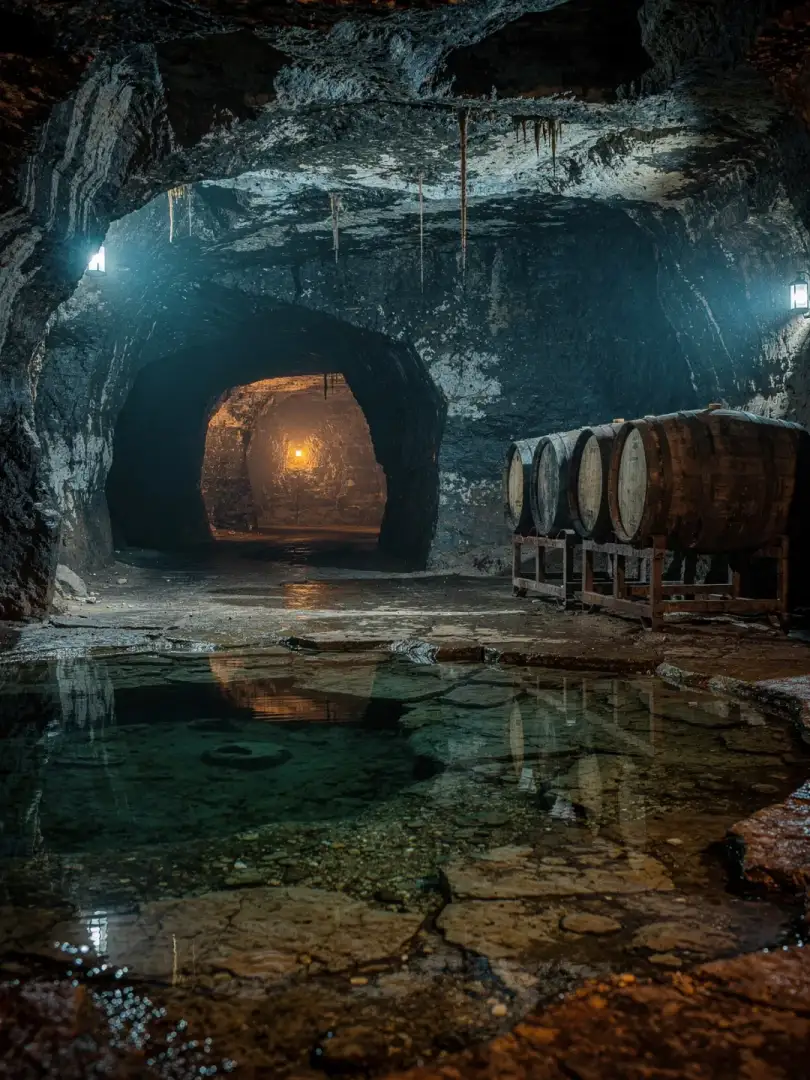
Why were the breweries of St. Louis built over caves? The city sits on limestone, and limestone is porous: water has carved out passages and chambers over millennia. For 19th-century brewers this was a gift, since lager beer wants to age cool, and refrigeration didn't yet exist.
Johann Adam Lemp found just such a cave south of the city's boundary at the time, at what is now Cherokee Street; it became known as Cherokee Cave. He leased the site from the city, later bought it, and expanded the passages into cellars. In winter, ice was cut from the Mississippi and hauled in to keep things cold through the summer as well.
With the arrival of mechanical refrigeration, the caves became obsolete. Parts of the system were later used as a theater, a swimming pool, and a bowling alley, and a tunnel ran from the Lemp mansion down to the brewery. Walking along Cherokee Street today, you'd see no trace of it—the passages lie in darkness beneath the pavement.
The brewing water comes from the river. St. Louis draws its water supply from the Mississippi and Missouri, both of which carry a lot of sediment and therefore require extensive treatment. The city's summer climate is hot and humid, while winters bring freezing temperatures; this, too, is why the cool rock was so valuable.
Whether a city's water shapes its beer style is hard to tell today: nearly all breweries soften, filter, and adjust their water to a recipe. A mild, pale lager in St. Louis doesn't come about because the river water is mild, but because the brewers design it that way.